Tampilkan postingan dengan label history of american space. Tampilkan semua postingan

Selasa, 20 Desember 2011

Watching the Space Race: Well, One Worked

by Walt Staples

Note from Karina:  My kids are on Christmas holidays, and I just finished writing Neeta Lyffe, Zombie Exterminator 2:  I Left My Brains in San Francisco, so it's the perfect time for a break.  Walt, meanwhile, has so been enjoying his trip down memory lane, he's got several posts done for "Watching the Space Race."  So for the next couple of weeks, you can join him in remembering the "Glory Days" of space travel.  Enjoy!
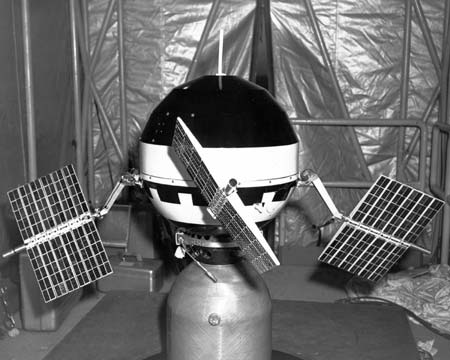


It was two days after my ninth birthday that NBC's Chet Huntley announced yet another Pioneer mission failure. This time the third stage and the Pioneer lunar orbiter (Pioneer P-3, fifth in the series) were stripped off of the Atlas-Able launch combination by the slipstream after its aerodynamic shroud (read nosecone) was shredded. At the time, this didn't particularly upset me. Watching American efforts since Vanguard had taught me that most American launches go wrong—it was like me and spelling tests.

The watching the early Pioneer program was rather like watching the progression of Commanders of the Army of the Potomac during the War Between the States/American Civil War (“Our own beloved General George Mead is now Commander; the fifth if you keep count as they go by.” – Buster Kilrain in the movie, “Gettysburg”). Unfortunately, this fifth Pioneer launch was a dud just as were the previous four. NASA would have to launch an eighth before they found their George Mead.

Four months later, something weird happened at Cape Canaveral. At 13:00 GMT on 11 March 1960—a Pioneer launch actually worked. Pioneer 5 (eight in the series), known to us kids as the “paddle-wheel satellite,” was inserted into a solar orbit by its Thor-Able launch vehicle.

We referred to the 75 pound (34 kilo) satellite as the “Paddle-wheel Satellite” for good reason. Protruding from its 26 inch (66 cm) diameter sides were what could only be described as four “paddles.” The paddles in reality were solar arrays to power the four science packages on board. The  four packages consisted of an instrument to detect charged solar particles, a magnetometer to measure magnetic fields of both of Earth and those in interplanetary space, a cosmic ray detector, and a micrometeorite impact detector. The solar cells were so few that collected data had to be saved and sent to Earth in four 25 minute spurts spread over 24 hours. The signals were received at England's Jodrell Bank Observatory (a place familiar to Dr. Who fans) and the Air Force's Hawaii Tracking Station at Kaena Point on Oahu (originally built for the Discovery/Corona program of reconnaissance satellites). The last data was received on 30 April 1960 and the last signal of any kind was received at Jodrell Bank on 26 June 1960 when Pioneer 5 was 22.5 million miles (36.2 million km) from Earth.

The results from the instrumentation was mixed. Magnetic fields were successfully measured, as was cosmic radiation and particles from solar flares. Unfortunately, the micrometeorite counter was overwhelmed with hits.

Two more lunar Pioneer missions returned to the project's accustomed trend with failures. The last being Pioneer Z, on 15 December 1960, when the upper stage of its Atlas-Able failed.

The early Pioneer program, whether attempting to put up a lunar orbiter, solar orbiter, or lunar flyby, was a reasonably consistent string of disasters, marred only by its single success. As one English friend put it, “I think it just shows the sheer bloody-mindedness of you Yanks.” (I prefer to think of it as being “firm and steadfast of purpose.”) The “Pioneer” name would later be resurrected for a wildly successful series of interplanetary probes that would launch between 1965 and 1978.

Sabtu, 26 November 2011

Watching the Space Race: A Pratfall to the Stars

by Walter Staples
This is tagged as Vanguard 2.  Couldn't find Vanguard 1 photo. --Karina

The scene on the little Admiral portable TV was a graded mixture of grays punctuated by details of black and grayish white given a greenish cast by the sunglasses I wore. The bedroom itself was dim with the shades drawn that Friday forenoon. Why sunglasses in a darken room? I was down with a case of the German measles and Dr. Greer at the clinic said it was the only way I could watch TV.

It had been a lousy fall so far. In the Shenandoah Valley, it seemed to be raining constantly, even when it wasn't. There was no iron work for my father. According to him, it was President Eisenhower’s fault somehow—being six, going on seven, the reasons were kind of beyond me—something to do with Stevenson losing the year before. My birthday a few days before Thanksgiving had been okay, but this year my father failed to get a deer. But the very worst happened in the early parts of October and November—the Soviets had put not one, but two Sputniks into orbit! The second even carried a dog named Laika (the adults were careful not to mention to us kids that hers was a one-way trip). But today it was all going to turn around. About noon, Eastern time, America was launching her first satellite!

The Vanguard rocket on the screen looked more like a #2 pencil than a proper rocket like those flown by Rocky Jones: Space Ranger and Tom Corbett: Space Cadet. It lacked the streamlined bullet shape and flaring tail fins ending in landing shocks that anyone who'd watched “Destination Moon” knew were required for a true spaceship. But Vanguard was going work in spite of its lack. We knew it would. Best of all, it wasn't a war rocket like the Reds had used—it was civilian through and through (at that age, it didn't really occur to us kids to wonder why the Navy was building and launching a civilian rocket).

The TV broadcast cut into the countdown. I called to my mother, in the other room, that they were going to launch the rocket. In return, I received a, “That's nice, dear.” I shrugged. The ways of adults are many and strange. The countdown progressed, “...T-minus ten-nine-eight-seven-six-five-four-three-two-one-zero-Fire.” And fire it did. A great boiling ball of flame engulfed the lower half of the rocket, which fell over as its nose cone came off, and totally disappeared in a larger fireball. Time stopped. Apparently, the TV announcer was frozen just as was I. His silence stretched.

I don't remember what came next that soggy 6th of December in 1957. It didn't really matter anymore.

*

Project Vanguard was one of three programs in the running to loft the first American satellite. The Army was pushing its Explorer program to launch using a modified Redstone ballistic missile. The Air Force was pitching a program using their as then unbuilt Atlas missile. The Navy's Vanguard used an outgrowth of an atmospheric sounding rocket, the Viking. As the White House was unsure just how the Soviets were going to react to an American satellite passing overhead every 90-some minutes, it was decided to go for a launch system without the merest hint of military development in its linage. Vanguard got the nod as the least warlike.

The mission of Vanguard TV3 (or, as we knew it at the time, Vanguard I) was three-fold officially: Put a satellite in orbit for the International Geophysical Year, do at least one experiment while in orbit, and be successfully tracked from the ground while in orbit. Its unofficial mission was to ameliorate our looking like fools before the world.

The reaction of the American public, once it got over its collective cringe at Vanguard's failure live on TV within the 48 U.S. states (our ability to make fools of ourselves live on TV broadcast all over the world would come later with Telstar—a event five years in the future), was a combination of wry humor and a determination to get it right next time.

The gallows humor took the form of jokes such as:

            “How does a Cape Canaveral countdown go?”
            “...5-4-3-2-1-oh, hell!”

Even in the 1961 movie comedy “One, Two, Three,” an East German character when asked why he wants to build rockets for the Russians answers, “Because with Russian rocket, Mars! Venus! Jupiter! With American rocket, Miami Beach!”

The determination to succeed was signaled when concerns about the launch vehicle's bloodlines were cast to the winds and Wernher von Braun and the Army came up to bat.
Related Posts Plugin for WordPress, Blogger...