Tampilkan postingan dengan label NASA missions. Tampilkan semua postingan

Selasa, 01 November 2011

Please, Mr. Cain--Don't Kill Commerical Space

NOTE:  This blog is about SPACE, not about politics, but sometimes politics affects space, as we all know.  Today, I'm venturing into politics.  Anyone who comments outside the topic of this blog, especially if it is inflammatory, will have their comment deleted.  We're all intelligent, reasoning adults here, so please don't let politics turn you into something else.

In 2010, Obama announced that he was going to scrap NASA's near-space missions and leave them to commercial interests while setting NASA's goals toward longer distance and space research.  Now, as candidates campaign, we're seeing some pushback on that policy.  Last week, Herman Cain, who is running for the Republican candidacy, said that President Obama “has cut our space program to the point that we now have to bum a ride with the Russians in order to get to outer space." I have to admit, I'm disappointed and concerned about his approach for a couple of reasons:
  • The Shuttle was way beyond its life and needed to be retired.
  • The space program was already on the decline as a result of several administrations (back to Clinton, really) when we didn't start working consistently on a replacement for the shuttle.
  • Each administration (especially if it's the opposite party from the one before) changes the goals, programs, etc., at least in part because it was the other guy's program and they can do better.
So blaming Obama is really typical political grandstanding, and while I'm not surprised, especially in a speech in Huntsville, AL, home for NASA, I'm concerned about what Cain--or any candidate--will do about government or commercial space once in office.

Now, Cain has not given any specifics on what exactly he would do to "relaunch our space program," but he did say, "It's not just about getting to the moon and outer space. The space program inspires other technological advances to business and the economy. In the Cain presidency, it will be reversed back to where it should be."  (Huntsville Times)  Does that mean back to NASA making trucks for the ISS or back to making the US a major space power?


Granted, space is a low political priority, although I agree that it is a point of national pride, a growing industry and a vital step to our future.  However, as Cain said in his same speech, governments don't grow the economy; businesses do.  So, by extension, if we want to have a growing space industry (a manned space industry in this case), we need to get the commercial space businesses involved.  Supplying the ISS is a good start.  Just because we don't want to "bum a ride" with the Russians, doesn't mean we need to turn NASA into a taxi service again.

Loved ya, Shuttle, but it's time to move on.

I'll be watching with interest to see what other potential candidates say about the space issue.  If you see an article, please send it my way!
Jumat, 28 Oktober 2011

Industry Profile: Orbital Sciences Corporation

Time to give a different company some space on the blog. (Pun intended, of course.)

Unlike SpaceX, Orbital (also known as Orbital Sciences Corporation) has been around for a long time, and has done some pretty innovative stuff.  Space geeks of my generation will remember how cool the Pegasus launch system was--the rocket actually launches from an airplane.
Now they've accomplished 40 or more missions.  Pegasus is taken up to around 40,000 feet on the Stargazer aircraft, then dropped. Five seconds later, the rockets fire and it continues into orbit.  By using plane power, it cuts cost of breaking the biggest pull of gravity.  This handy little rocket can carry payloads up to 1000 pounds into orbit in about 10 minutes.  Read More on Orbital's Website.

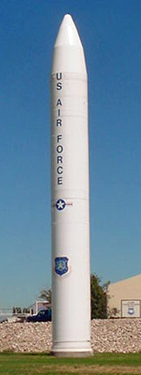
Orbital has mostly been concentrating on the small-to-medium satellites.  Thier larger missiles are a combination of Pegasus boosters and old ICBM missiles--the Minuteman II and Peacekeeper.  (See? the government CAN recycle!)
More than a memorial lawn ornament to the Cold War Era.
(Actually, they just use the engines.)
With the commercialization of manned space, they are getting into the act as well.  Their Minotaur V, a 5-stage rocket using 3 Peacekeeper missile engines and two commercial rocket engines, is cheap and uses proven technology, which is a bonus in this business where big booms are bad.  Its brochure says it's build for "to provide an extremely cost-effective capability to launch US government sponsored small spacecraft into high energy trajectories, including Geosynchronous Transfer Orbits (GTO) as well as translunar and beyond," while another rocket, the Taurus II will carry the Cygnus resupply craft to the ISS.


It looks like a big trash can, doesn't it?  Reminds me of "These Three," a Rescue Sisters story with a beaten-down ship called Le Poubelle (French for trash can.).  You can read that in ISIG I, BTW.  It's more impressive in motion...at least until it disintegrates upon reaching the atmosphere.  I'm hoping that's supposed to happen!


It's patterned after the existing multi-purpose Logistics Modules used on the space station.  (Orbital seems big on using existing technologies approved by the government.  Not a bad angle if you're looking for government contracts.)  They have a COTS contract with NASA for resupply operations between 2012 and 2015 and the Cygnus is supposed to be crew capable.  (They didn't say on their website directly, but reading between the lines, they'll use a launch abort system similar to the one they designed for the Lockheed-Martin Orion capsule.)

Orbital is a small but strong company with 3700 employees, 1800+ or which are engineers. They're located in Arizona (manufacturing), California (launch) and the DC beltway (admin.)  Their website is http://www.orbital.com.

So, what do you think?  How do they compare to SpaceX, in your opinion?  What else would you like to know about them?  Let's start a discussion!

Selasa, 11 Oktober 2011

Current Events: NASA to produce Plutonium

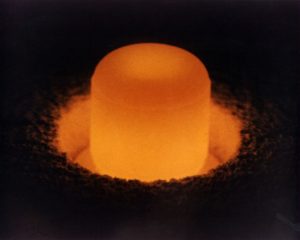
No putting a pumpkin face on this.  This is plutonium!
Interesting thing about space probes--they need power to go.

And that's why NASA is a leetle concerned about the Senate turning down the request for the Department of Energy to contribute $15 million dollars to the production of PU-238, which is reactor-grade plutonium and is used to power deep space probes like the Cassini probe or Mars rover-type missions.

Why nuclear power?  Solar power can only do so much.  As probes get farther out in the solar system, the sun's rays just aren't enough to keep them going.  In cases like the Mars probes, the sands of Mars damage or deteriorate the solar panels.  Nuclear power is sure and long term.

Interestingly, we stopped producing plutonium in the 1980s.  (I could not find a sure answer why, but would guess it was because we had a lot and budgets were being cut, etc.)  We've since run out of our domestic supply.  We've been getting some from Russia, but in 2009, they reneged on a commitment to supply the Energy department with material in 2010 and 2011.  According to Space news, Sept 26, 2011, Russia's Rosatom State Atomic Energy Corp. wants to renegotiate the contract. That's putting some space exploration projects in jeopardy.

Now here's the fun thing--we can't make our own anymore.  The infrastructure is gone, and according to Co-chair of the nuclear regulatory commission, "The people who know how to do it are retiring or dead."  So the first thing we have to do is--you guess it:  Study the issue!
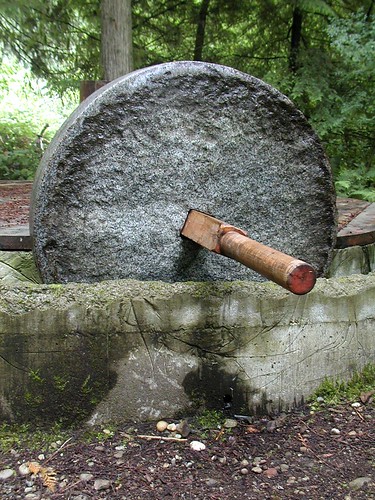
Time to reinvent the wheel
So there's a few million dollars right there, maybe $7.5 to $10 million.  (Incidentally, Rob said that this number does not seem unreasonable considering the changes in technology and safety, plus all the security needed etc.  Since he's worked with high-level government stuff, I'll trust him, though I cringe at the cost of re-learning what we once knew.)

To make matters more fun, the Obama administration wanted to split the Pu-238 production project costs between NASA and the Department of Energy, but the DoE isn't interested in spending its budget for space instead of energy, and the Senate backs them up.

Now, I don't necessarily disagree, especially when I found this budget proposal (found in Space Politics.)  I think you can squeak out that $15 million.  Personally, I would take it out of the education section.  NASA does a lot of nifty programs that they offer schools and individuals, but these are only nifty and peripheral.  (I've seen and even used bits of them while homeschooling.) 

Account PBR HAC SAC
Science $5,016.80 $4,504.00 $5,100.00
Aeronautics $569.40 $569.93 $501.00
Space Technology $1,024.20 $375.00 $637.00
Exploration $3,948.70 $3,649.00 $3,775.00
Space Operations $4,346.90 $4,064.00 $4,285.00
Education $138.40 $138.00 $138.40
Cross-Agency Support $3,192.00 $3,050.00 $3,043.00
Construction $450.40 $424.00 $422.00
Inspector General $37.50 $36.30 $37.30
TOTAL $18,724.30 $16,810.23 $17,938.70
Related Posts Plugin for WordPress, Blogger...