Tampilkan postingan dengan label Orbital. Tampilkan semua postingan

Selasa, 08 November 2011

Slow downs for Orbital's Taurus 2 and Cygnus Debuts

Well, it looks like Orbital is going to have to push off their planned launches of the Taurus 2 rocket carrying their Cygnus capsule until late February or early March.  The problem, they say, is not with the rocket or capsule, but the fact that the new launch facilities are not ready.  Here's the full article from Space news.

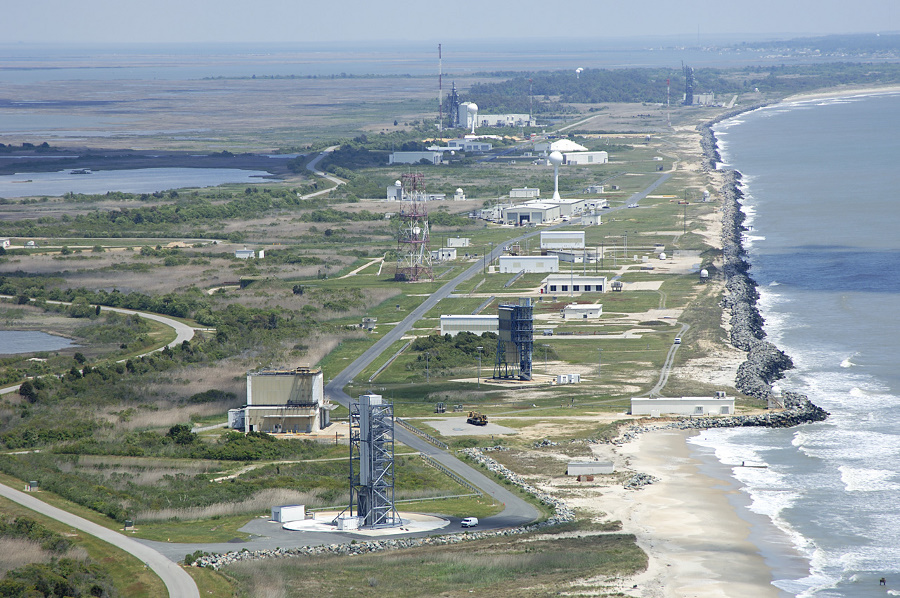
Wallops Island, photo courtesy of NASA

Wallops Island has been a launch base for NASA since 1959.  NASA tested the Mercury space capsules from Wallops Island before taking them to Cape Canaveral and putting astronauts in them.  However, it's mission has been suborbital and small spacecraft missions.  In 1998, the Virginia Commercial Space Flight Authority created the Mid-Atlantic Regional Spaceport in order to support commercial space flights with two medium-to-heavy lift launch pads.  In order to support Taurus 2, some improvements needed to be made.  The Virginia Commercial Space Flight Authority was doing those, and (as seems to happen with everything involving a government or construction operation) they ran behind schedule.  Apparently, the big problems were some rework on the launch mount and the cleaning of propellant and pressurization tanks that were not properly maintained throughout the year.  The work was to have been done by October 24, but it looks like final certification and handoff to Orbital will be in January instead.
Orbital's launch site on Wallops Island, from the Orbital website


Support structures are very important for the space industry, and they have to have the same level of perfection that the rockets and capsules do.  Unlike planes that in a pinch can take off and land on any reasonable surface, rockets need a lot more support in order to not only launch safely, but to also meet their objective in orbit.  So it's frustrating to again see delays, but with so many cogs in the machine, you have to expect some.  Orbital is already doing work on the Taurus to prepare for the eventual launch, so they aren't in a holding pattern.  They also have a lot of other missions to accomplish, and are getting more contracts for launching satellites for national military and commercial interests and international telecommunications.

Jumat, 04 November 2011

Industry Profile: Orbital Sciences Corporation, 2


Got to love YouTube videos.  Here's the company hype video on Orbital Sciences Corporation, also known as Orbital.

here's another fun one from the employees POV--obviously a recruiting video, but it does sound like a fun place to work--and possibly a frustrating one if you aren't into getting tossed into the water and told to swim.  (They give their employees a LOT of individual responsibility, it seems.)  Of course, they are a small company, so they can pick the best and give them more freedom to run. 


Something I didn't realize is that Orbital is subcontracting the manufacture of the Cygnus cargo module they are developing to supply the International Space Station.  (Remember, they have an agreement to run 8 missions between 2012 and 2016.  Thales Alenia Space does a lot of module work for the ISS--their banner says they created 50 percent of the habitable volume of the ISS.  That's actually very in keeping with the Orbital philosophy, I think.  They take existing technologies and adapt them to new purposes.  Check out Thales Alenia Space here.

Unless anyone has questions, that's it for the profile of Orbital. They have a very different approach from SpaceX, but I think they will be as successful.  I certainly think it's advantageous for the US to have more than one means to access space.

Jumat, 28 Oktober 2011

Industry Profile: Orbital Sciences Corporation

Time to give a different company some space on the blog. (Pun intended, of course.)

Unlike SpaceX, Orbital (also known as Orbital Sciences Corporation) has been around for a long time, and has done some pretty innovative stuff.  Space geeks of my generation will remember how cool the Pegasus launch system was--the rocket actually launches from an airplane.
Now they've accomplished 40 or more missions.  Pegasus is taken up to around 40,000 feet on the Stargazer aircraft, then dropped. Five seconds later, the rockets fire and it continues into orbit.  By using plane power, it cuts cost of breaking the biggest pull of gravity.  This handy little rocket can carry payloads up to 1000 pounds into orbit in about 10 minutes.  Read More on Orbital's Website.

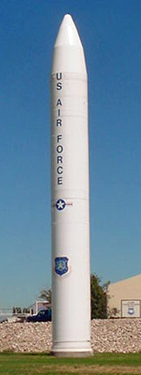
Orbital has mostly been concentrating on the small-to-medium satellites.  Thier larger missiles are a combination of Pegasus boosters and old ICBM missiles--the Minuteman II and Peacekeeper.  (See? the government CAN recycle!)
More than a memorial lawn ornament to the Cold War Era.
(Actually, they just use the engines.)
With the commercialization of manned space, they are getting into the act as well.  Their Minotaur V, a 5-stage rocket using 3 Peacekeeper missile engines and two commercial rocket engines, is cheap and uses proven technology, which is a bonus in this business where big booms are bad.  Its brochure says it's build for "to provide an extremely cost-effective capability to launch US government sponsored small spacecraft into high energy trajectories, including Geosynchronous Transfer Orbits (GTO) as well as translunar and beyond," while another rocket, the Taurus II will carry the Cygnus resupply craft to the ISS.


It looks like a big trash can, doesn't it?  Reminds me of "These Three," a Rescue Sisters story with a beaten-down ship called Le Poubelle (French for trash can.).  You can read that in ISIG I, BTW.  It's more impressive in motion...at least until it disintegrates upon reaching the atmosphere.  I'm hoping that's supposed to happen!


It's patterned after the existing multi-purpose Logistics Modules used on the space station.  (Orbital seems big on using existing technologies approved by the government.  Not a bad angle if you're looking for government contracts.)  They have a COTS contract with NASA for resupply operations between 2012 and 2015 and the Cygnus is supposed to be crew capable.  (They didn't say on their website directly, but reading between the lines, they'll use a launch abort system similar to the one they designed for the Lockheed-Martin Orion capsule.)

Orbital is a small but strong company with 3700 employees, 1800+ or which are engineers. They're located in Arizona (manufacturing), California (launch) and the DC beltway (admin.)  Their website is http://www.orbital.com.

So, what do you think?  How do they compare to SpaceX, in your opinion?  What else would you like to know about them?  Let's start a discussion!

Senin, 05 September 2011

Yes, Virginia, There is a Space Industry


What could be more representative of the American space program? Yet  it is so much more!


When I told one of my friends that I was creating a blog about the space industry, she asked, "Is there a space industry after Obama killed NASA?"


First, let's assume for this article, we're talking about manned space and exploration, rather than the thriving industry of putting satellites into orbit so we can get better cell phone reception.


She's referring to Obama's 2010 budget proposal that cancelled the Constellation program, which was supposed to replace the space shuttle and eventually get us to the moon (2020.)  Here's an article in Discovery about it.  And another in Scientific American.  This might indeed seem a death knell for space, or at least for manned space, but there are several things to consider.


First, the Constellation program was already overbudget and experiencing a lot of technical problems.  (Universe  Today reported in Feb 1, 2010, "Also, its estimate costs through 2015 have risen from $28 billion in 2006 to $44 billion today.")  There was also doubts about it being able to meet its deadlines of manned flight by 2015 and the moon by 2020.


What about the shuttle?  It was simply at the end of its life.  The technology was so old, that to repair the shuttle, NASA was having to search the Internet for spare parts.  President Bush actually canceled the shuttle program because we couldn't physically support the craft any longer.  


However, at the same time that President Obama called for the cancellation of the program, he recommended increasing NASA's budget for it to concentrate on other things--increasing the life of the ISS, promoting innovation and technologies, and exploring further on.   As columnist Phil Plait said, "NASA can concentrate on what it should: innovation, pushing the limits, paving the road. Once the road is laid, let others use it."


So, are there others to use the road?  Let's start with the fact that the ISS is International, and other nations have been servicing it, including the European Space Agency and the Russians, who are--or rather were--flying the astronauts to the station when the Shuttle wasn't.  (They recently had trouble with their Soyuz capsules, and now we're not sure we will keep astronauts on the station--weep!--but that's another story.)  So the space industry as a whole will continue, even if NASA died, which it isn't.


In addition, American commercial space is growing--and Obama has given it a nice void to fill.  There are already many companies striving to fulfill the dream of manned space:
  • Armadillo Aerospace (suborbital focused)

  • Bigelow 

  • Blue Origin (suborbital focused)

  • Boeing

  • Orbital

  • Sierra Nevada Corp

  • Space X

  • United Launch Alliance (serves the military; not sure they're looking at manned)

  • Virgin Galactic (suborbital focused)


(Rob gave me this list.  If we missed any, let me know.)  There are also a lot of budding industries to build the craft, make the fuel, create the engines, etc.


Later this week, I'll share an article about how some of these companies are already moving into Cape Canaveral (or negotiating to).  But for now, the answer to my friend's question is, "Yes, Virginia, there still is a space industry."


The SpaceX Dragon spacecraft after its test mission.

* Since I have a follower named Virginia, I'd like to state for the record that she did not ask this, but I could not resist the play off the title.

Related Posts Plugin for WordPress, Blogger...