From Universe Today: NASA Issues Report On Commercial Crew as SpaceX’s CEO Testifies About SpaceX’s Progress
NASA has recently posted the latest update as to how the Commercial Crew Development 2 (CCDev2) program is doing in terms of meeting milestones laid out at the program’s inception. According to the third status report that was released by NASA, CCDev2’s partners continue to meet these objectives. The space agency has worked to provide regular updates about the program’s progress.
“There is a lot happening in NASA’s commercial crew and cargo programs and we want to make sure the public and our stakeholders are informed about the progress industry is making,” said Phil McAlister, NASA’s director of commercial spaceflight development. “It’s exciting to see these spaceflight concepts move forward.”
Reports on the progress of commercial crew are issued on a bi-monthly basis. The reports are directed toward the primary stakeholder of this program, the U.S. taxpayer. NASA has invested both financial and technical assets in an effort to accelerate the development of commercial access to orbit.
This report came out at the same time as Space Exploration Technologies’ (SpaceX) CEO, Elon Musk, testified before the U.S. House Science, Space, and Technology Committee regarding NASA’s commercial crewed program.
SpaceX itself has been awarded $75 million under the CCDev program to develop a launch abort system, known as “DragonRider” that would enable the company’s Dragon spacecraft to transport astronauts. SpaceX was awarded $1.6 billion under the Commercial Orbital Transportation Services or COTS contract with NASA. Under the COTS contract, SpaceX must fly three demonstration flights as well as nine cargo delivery flights to the orbiting outpost. SpaceX is currently working to combine the second and third demonstration flights into one mission, currently scheduled to fly at the end of this year.
During Musk’s comments to the House, he highlighted his company’s efforts to make space travel more accessible.
“America’s endeavors in space are truly inspirational. I deeply believe that human spaceflight is one of the great achievements of humankind. Although NASA only sent a handful of people to the moon, it felt like we all went,” Musk said in a written statement. “We vicariously shared in the adventure and achievement. My goal, and the goal of SpaceX, is to help create the technology so that more can share in that great adventure.”
To date, SpaceX is the only company to have demonstrated the capacity of their launch vehicle as well as a spacecraft. The company launched the first of its Dragon spacecraft atop of its Falcon 9 rocket this past December. The Dragon completed two orbits successfully before splashing down safely off the coast of California.
NASA is relying on companies like SpaceX to develop commercial crew transportation capabilities that could one day send astronauts to and from the International Space Station (ISS). It is hoped that CCDev2 will help reduce U.S. dependence on Russia’s Soyuz spacecraft for access to the ISS. Allowing commercial companies to take over the responsibility of sending crews to the ISS might also allow the space agency focus on sending astronauts beyond low-Earth-orbit for the first time in four decades.
Senin, 31 Oktober 2011
Minggu, 30 Oktober 2011
Tiangong-1 Ready for Docking
From CRI-English.com: Tiangong-1 Ready for Docking
China's first space lab module Tiangong-1, or Heavenly Palace-1, has completed a 180-degree turn-around to prepare itself for the upcoming docking with spacecraft Shenzhou-8, ready to blast off early November in northwestern desert area, a space scientist said Sunday.
The target spacecraft adjusted itself to fly invertedly at 7:34 p.m. under the control of the Beijing Aerospace Flight Control Center, said Chen Hongmin, director of the command center for Chinese space program.
Chen said the spacecraft was lowered to the 343-km-high rendezvous and docking orbit on Sunday after a series of maneuver including orbit control and on-orbit testing since its launch into space on Sept. 29.
As of 7:30 p.m. Sunday, Tiangong-1 has orbited Earth for 30 days and 22 hours, according to Chen.
Monitoring results have shown that the spacecraft has been flying smoothly and stably and met with the requirement for the docking mission, Chen said.
The docking between Tiangong-1 and Shenzhou-8 has put up high requirement on the monitoring and control system as the maneuver of the two spacecraft is synergetic, Chen said.
Meanwhile, the dramatically changing weather conditions posed another challenge for scientists to ascertain the launch time for Shenzhou-8 at the Jiuquan Satellite Launch Center in the Gobi desert, according to Chen.
Scientists at the Beijing command center are racing to collect and analyze all data and information to work out corresponding measures and to calculate the precise launch time, Chen said.
Tiangong-1 lab module is expected to perform China's first-ever rendezvous and docking with Shenzhou-8 after the spacecraft's launch.
The rendezvous and docking technologies are considered crucial for China's manned space program.
Once China has mastered the technologies of rendezvous and docking, it will be equipped with the basic technologies and capacity required for the building of a space station, said Zhou Jianping, chief designer of China's manned space program.
"It will make it possible for China to carry out space exploration of larger scale," Zhou told Xinhua Sunday in an exclusive interview at the Jiuquan launch center.
"The mastering of rendezvous and docking technologies will lay a key technical foundation for China's building of space station and deep-space exploration," Zhou said.
China has so far mastered basic technologies for manned spacecraft and extravehicular activities (EVA), according to Zhou.
During the Shenzhou-7 mission in September 2008, astronaut Zhai Zhigang performed China's first-ever space walk, wearing EVA space suits made in China.
The docking will not only send astronauts and cargo supply to the space station, but also increase efficiency and lower risks for farther space exploration such as lunar landing and Mars visiting, Zhou said.
After its first space docking test in November, China will continue sending spacecraft Shenzhou-9 and Shenzhou-10 before 2012 for unmanned or manned docking with Tiangong-1, according to Zhou.
Zhou said China welcomes other countries to participate in its space program and is willing to join in international aerospace cooperation.
"We shall open our space station to the world to create a platform of scientific research for Chinese scientists and their peers from all over the world," Zhou said.
Wu Ping, a spokeswoman for China's manned space program, said on Sunday that China would invite officials and experts from the European Space Agency and the German Aerospace Center to observe the launch of the Shenzhou-8 spacecraft.
During the launch of Shenzhou-7 in September 2008, Russian aerospace experts were also invited to the launch center to observe the mission.
"The new knowledge obtained through space science research should be common wealth for human beings and should benefit the whole world," Zhou said
China's first space lab module Tiangong-1, or Heavenly Palace-1, has completed a 180-degree turn-around to prepare itself for the upcoming docking with spacecraft Shenzhou-8, ready to blast off early November in northwestern desert area, a space scientist said Sunday.
The target spacecraft adjusted itself to fly invertedly at 7:34 p.m. under the control of the Beijing Aerospace Flight Control Center, said Chen Hongmin, director of the command center for Chinese space program.
Chen said the spacecraft was lowered to the 343-km-high rendezvous and docking orbit on Sunday after a series of maneuver including orbit control and on-orbit testing since its launch into space on Sept. 29.
As of 7:30 p.m. Sunday, Tiangong-1 has orbited Earth for 30 days and 22 hours, according to Chen.
Monitoring results have shown that the spacecraft has been flying smoothly and stably and met with the requirement for the docking mission, Chen said.
The docking between Tiangong-1 and Shenzhou-8 has put up high requirement on the monitoring and control system as the maneuver of the two spacecraft is synergetic, Chen said.
Meanwhile, the dramatically changing weather conditions posed another challenge for scientists to ascertain the launch time for Shenzhou-8 at the Jiuquan Satellite Launch Center in the Gobi desert, according to Chen.
Scientists at the Beijing command center are racing to collect and analyze all data and information to work out corresponding measures and to calculate the precise launch time, Chen said.
Tiangong-1 lab module is expected to perform China's first-ever rendezvous and docking with Shenzhou-8 after the spacecraft's launch.
The rendezvous and docking technologies are considered crucial for China's manned space program.
Once China has mastered the technologies of rendezvous and docking, it will be equipped with the basic technologies and capacity required for the building of a space station, said Zhou Jianping, chief designer of China's manned space program.
"It will make it possible for China to carry out space exploration of larger scale," Zhou told Xinhua Sunday in an exclusive interview at the Jiuquan launch center.
"The mastering of rendezvous and docking technologies will lay a key technical foundation for China's building of space station and deep-space exploration," Zhou said.
China has so far mastered basic technologies for manned spacecraft and extravehicular activities (EVA), according to Zhou.
During the Shenzhou-7 mission in September 2008, astronaut Zhai Zhigang performed China's first-ever space walk, wearing EVA space suits made in China.
The docking will not only send astronauts and cargo supply to the space station, but also increase efficiency and lower risks for farther space exploration such as lunar landing and Mars visiting, Zhou said.
After its first space docking test in November, China will continue sending spacecraft Shenzhou-9 and Shenzhou-10 before 2012 for unmanned or manned docking with Tiangong-1, according to Zhou.
Zhou said China welcomes other countries to participate in its space program and is willing to join in international aerospace cooperation.
"We shall open our space station to the world to create a platform of scientific research for Chinese scientists and their peers from all over the world," Zhou said.
Wu Ping, a spokeswoman for China's manned space program, said on Sunday that China would invite officials and experts from the European Space Agency and the German Aerospace Center to observe the launch of the Shenzhou-8 spacecraft.
During the launch of Shenzhou-7 in September 2008, Russian aerospace experts were also invited to the launch center to observe the mission.
"The new knowledge obtained through space science research should be common wealth for human beings and should benefit the whole world," Zhou said
Students have a blast at NASA camps
From The Republic: Students have a blast at NASA camps
San Angelo, Texas — Lori Scott's dream of becoming an astronaut was dashed this summer.
While attending a NASA camp for high school students at the Johnson Space Center in Houston, the Central High School senior found out she's too short to travel into space. The minimum height is 62 inches, or 5-foot-2.
But Scott found out there are a wealth of other opportunities in the U.S. space program, especially in its mission to put humans on Mars.
"I still want to work at NASA, in the control room," Scott said.
She and five classmates spent much of their junior year at Central working on getting into the competitive NASA High School Aerospace Scholars summer camp.
Central High physics teacher Carly Stephens found out about the program while attending the Space Exploration Educators Conference at Johnson Space Center in 2009 and came back excited about the opportunities the program could hold for her students. Four ended up attending the six-day camps in 2010.
Stephens said admittance into the program involves a lot of hard work and is highly competitive.
Applications must be submitted in November and require a recommendation from their teacher and their congressman. Those accepted start working in January on 10 assignments, which are due every other week and are graded by a team of educators working with the National Aeronautics and Space Administration.
"Because the program requires a lot of outside work, I let them know that in advance," Stephens said. "I try to show all the positives about it so they can get excited about it."
Stephens said only the top students in the state are selected, and NASA pays for "absolutely everything."
"They have different sessions throughout the summer," she said. "They've really had to network with students across the state."
Central senior Katherine Lauer, who attended the camp this summer, said 600 applications were accepted and, of those, 400 made the grade for the camps. NASA chooses the week a student will attend.
"We all had a little bit different experience," Lauer said.
Lauer said she wanted the opportunity to work with people who work at NASA, "to see people who are only a couple of years older than us who actually have internships there."
Nearly all the students who have attended say they plan to go into some field of engineering.
Central High seniors Gareth Fulks, Kevin Minzenmayer, Zach Pfluger and Jacob Starnes also attended the camps this summer.
Pfluger he was inspired to get into the program by curiosity.
"For one, I wanted to know what NASA was all about professionally, what was offered there, first-person view of what it's like to work there," he said.
Fulks said he plans to pursue a degree in chemical engineering.
"I liked getting to see what's really going on at NASA robots, test facilities, the astronauts' neutral buoyancy lab," Fulks said.
The buoyancy lab is the largest indoor pool in the world and contains a replica of the outer frame of the International Space Station.
"The water mimics space, floating in space," Scott said.
Pfluger said he wants to pursue a career in petroleum engineering or aerospace engineering.
"Aerospace engineering because of being at the camp, exploring the unknown out there," he said. "Petroleum engineering, it's something that's going to be around my whole lifetime. It's dependable; how I grew up."
Scott, who found out she is too short to be an astronaut, got a firsthand look at Mission Control.
"I was very lucky the week I went," she said, "the shuttle was docked at the space station and we watched a spacewalk from Mission Control."
Stephens said she will ask the six students who attended the camp to talk to this year's juniors about their experiences.
"For a lot of these students, this is just a steppingstone," she said. "There are so many NASA programs that will be available to them. They can apply for paid internships and those are not just shadowing; those are internships involved in the process."
She said the students' parents have said they see a new enthusiasm in the 17-year-olds.
"This generation, I think they have to have that excitement sparked," Stephens said. "They were born into a generation where people go into space — no big deal. I want them to have excitement for the next opportunity that will be available for them in space. I want them to dream."
San Angelo, Texas — Lori Scott's dream of becoming an astronaut was dashed this summer.
While attending a NASA camp for high school students at the Johnson Space Center in Houston, the Central High School senior found out she's too short to travel into space. The minimum height is 62 inches, or 5-foot-2.
But Scott found out there are a wealth of other opportunities in the U.S. space program, especially in its mission to put humans on Mars.
"I still want to work at NASA, in the control room," Scott said.
She and five classmates spent much of their junior year at Central working on getting into the competitive NASA High School Aerospace Scholars summer camp.
Central High physics teacher Carly Stephens found out about the program while attending the Space Exploration Educators Conference at Johnson Space Center in 2009 and came back excited about the opportunities the program could hold for her students. Four ended up attending the six-day camps in 2010.
Stephens said admittance into the program involves a lot of hard work and is highly competitive.
Applications must be submitted in November and require a recommendation from their teacher and their congressman. Those accepted start working in January on 10 assignments, which are due every other week and are graded by a team of educators working with the National Aeronautics and Space Administration.
"Because the program requires a lot of outside work, I let them know that in advance," Stephens said. "I try to show all the positives about it so they can get excited about it."
Stephens said only the top students in the state are selected, and NASA pays for "absolutely everything."
"They have different sessions throughout the summer," she said. "They've really had to network with students across the state."
Central senior Katherine Lauer, who attended the camp this summer, said 600 applications were accepted and, of those, 400 made the grade for the camps. NASA chooses the week a student will attend.
"We all had a little bit different experience," Lauer said.
Lauer said she wanted the opportunity to work with people who work at NASA, "to see people who are only a couple of years older than us who actually have internships there."
Nearly all the students who have attended say they plan to go into some field of engineering.
Central High seniors Gareth Fulks, Kevin Minzenmayer, Zach Pfluger and Jacob Starnes also attended the camps this summer.
Pfluger he was inspired to get into the program by curiosity.
"For one, I wanted to know what NASA was all about professionally, what was offered there, first-person view of what it's like to work there," he said.
Fulks said he plans to pursue a degree in chemical engineering.
"I liked getting to see what's really going on at NASA robots, test facilities, the astronauts' neutral buoyancy lab," Fulks said.
The buoyancy lab is the largest indoor pool in the world and contains a replica of the outer frame of the International Space Station.
"The water mimics space, floating in space," Scott said.
Pfluger said he wants to pursue a career in petroleum engineering or aerospace engineering.
"Aerospace engineering because of being at the camp, exploring the unknown out there," he said. "Petroleum engineering, it's something that's going to be around my whole lifetime. It's dependable; how I grew up."
Scott, who found out she is too short to be an astronaut, got a firsthand look at Mission Control.
"I was very lucky the week I went," she said, "the shuttle was docked at the space station and we watched a spacewalk from Mission Control."
Stephens said she will ask the six students who attended the camp to talk to this year's juniors about their experiences.
"For a lot of these students, this is just a steppingstone," she said. "There are so many NASA programs that will be available to them. They can apply for paid internships and those are not just shadowing; those are internships involved in the process."
She said the students' parents have said they see a new enthusiasm in the 17-year-olds.
"This generation, I think they have to have that excitement sparked," Stephens said. "They were born into a generation where people go into space — no big deal. I want them to have excitement for the next opportunity that will be available for them in space. I want them to dream."
Jumat, 28 Oktober 2011
Industry Profile: Orbital Sciences Corporation
Time to give a different company some space on the blog. (Pun intended, of course.)
Unlike SpaceX, Orbital (also known as Orbital Sciences Corporation) has been around for a long time, and has done some pretty innovative stuff. Space geeks of my generation will remember how cool the Pegasus launch system was--the rocket actually launches from an airplane.
Now they've accomplished 40 or more missions. Pegasus is taken up to around 40,000 feet on the Stargazer aircraft, then dropped. Five seconds later, the rockets fire and it continues into orbit. By using plane power, it cuts cost of breaking the biggest pull of gravity. This handy little rocket can carry payloads up to 1000 pounds into orbit in about 10 minutes. Read More on Orbital's Website.
Orbital has mostly been concentrating on the small-to-medium satellites. Thier larger missiles are a combination of Pegasus boosters and old ICBM missiles--the Minuteman II and Peacekeeper. (See? the government CAN recycle!)
With the commercialization of manned space, they are getting into the act as well. Their Minotaur V, a 5-stage rocket using 3 Peacekeeper missile engines and two commercial rocket engines, is cheap and uses proven technology, which is a bonus in this business where big booms are bad. Its brochure says it's build for "to provide an extremely cost-effective capability to launch US government sponsored small spacecraft into high energy trajectories, including Geosynchronous Transfer Orbits (GTO) as well as translunar and beyond," while another rocket, the Taurus II will carry the Cygnus resupply craft to the ISS.
It's patterned after the existing multi-purpose Logistics Modules used on the space station. (Orbital seems big on using existing technologies approved by the government. Not a bad angle if you're looking for government contracts.) They have a COTS contract with NASA for resupply operations between 2012 and 2015 and the Cygnus is supposed to be crew capable. (They didn't say on their website directly, but reading between the lines, they'll use a launch abort system similar to the one they designed for the Lockheed-Martin Orion capsule.)
Orbital is a small but strong company with 3700 employees, 1800+ or which are engineers. They're located in Arizona (manufacturing), California (launch) and the DC beltway (admin.) Their website is http://www.orbital.com.
So, what do you think? How do they compare to SpaceX, in your opinion? What else would you like to know about them? Let's start a discussion!
Unlike SpaceX, Orbital (also known as Orbital Sciences Corporation) has been around for a long time, and has done some pretty innovative stuff. Space geeks of my generation will remember how cool the Pegasus launch system was--the rocket actually launches from an airplane.
Now they've accomplished 40 or more missions. Pegasus is taken up to around 40,000 feet on the Stargazer aircraft, then dropped. Five seconds later, the rockets fire and it continues into orbit. By using plane power, it cuts cost of breaking the biggest pull of gravity. This handy little rocket can carry payloads up to 1000 pounds into orbit in about 10 minutes. Read More on Orbital's Website.
Orbital has mostly been concentrating on the small-to-medium satellites. Thier larger missiles are a combination of Pegasus boosters and old ICBM missiles--the Minuteman II and Peacekeeper. (See? the government CAN recycle!)
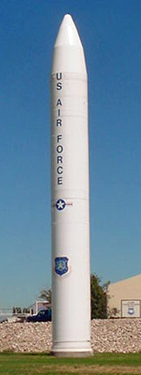 |
| More than a memorial lawn ornament to the Cold War Era. (Actually, they just use the engines.) |
 |
It's patterned after the existing multi-purpose Logistics Modules used on the space station. (Orbital seems big on using existing technologies approved by the government. Not a bad angle if you're looking for government contracts.) They have a COTS contract with NASA for resupply operations between 2012 and 2015 and the Cygnus is supposed to be crew capable. (They didn't say on their website directly, but reading between the lines, they'll use a launch abort system similar to the one they designed for the Lockheed-Martin Orion capsule.)
Orbital is a small but strong company with 3700 employees, 1800+ or which are engineers. They're located in Arizona (manufacturing), California (launch) and the DC beltway (admin.) Their website is http://www.orbital.com.
So, what do you think? How do they compare to SpaceX, in your opinion? What else would you like to know about them? Let's start a discussion!
Rabu, 26 Oktober 2011
NASA evacuates astronauts from deep-sea training
From Breitbart.com: NASA evacuates astronauts from deep-sea training
NASA evacuated a crew of astronauts Wednesday from an underwater lab off the coast of Florida where they were training for a trip to an asteroid, due to the approach of Hurricane Rina.
"Crew decompressed overnight and will return to surface shortly. Hurricane Rina just a little too close for comfort," the US space agency said in a message on the microblogging site Twitter.
The NASA Extreme Environment Mission Operations (NEEMO) team climbed aboard support boats that were waiting at the surface and they were expected to be on dry land by 9:00 am (1300 GMT).
The crew includes Japanese astronaut Takuya Onishi, Canadian Space Agency astronaut David Saint-Jacques, commander Shannon Walker of NASA, and Steve Squyres, an expert on planetary exploration at Cornell University in New York.
They were about midway through a 13-day mission at the Aquarius Underwater Laboratory, the only undersea lab of its kind in the world located three miles (4.5 kilometers) off the coast of Key Largo, Florida.
The practice run aimed to help astronauts figure out how they would get around on a near gravity-free asteroid, a trip President Barack Obama has said could happen by 2025.
Hurricane Rina, packing winds of 110 miles (175 kilometers) per hour, was forecast to become a major category three storm before making landfall near the sprawling resort city of Cancun on Thursday.
NASA evacuated a crew of astronauts Wednesday from an underwater lab off the coast of Florida where they were training for a trip to an asteroid, due to the approach of Hurricane Rina.
"Crew decompressed overnight and will return to surface shortly. Hurricane Rina just a little too close for comfort," the US space agency said in a message on the microblogging site Twitter.
The NASA Extreme Environment Mission Operations (NEEMO) team climbed aboard support boats that were waiting at the surface and they were expected to be on dry land by 9:00 am (1300 GMT).
The crew includes Japanese astronaut Takuya Onishi, Canadian Space Agency astronaut David Saint-Jacques, commander Shannon Walker of NASA, and Steve Squyres, an expert on planetary exploration at Cornell University in New York.
They were about midway through a 13-day mission at the Aquarius Underwater Laboratory, the only undersea lab of its kind in the world located three miles (4.5 kilometers) off the coast of Key Largo, Florida.
The practice run aimed to help astronauts figure out how they would get around on a near gravity-free asteroid, a trip President Barack Obama has said could happen by 2025.
Hurricane Rina, packing winds of 110 miles (175 kilometers) per hour, was forecast to become a major category three storm before making landfall near the sprawling resort city of Cancun on Thursday.
Selasa, 25 Oktober 2011
NASA Hosting Human Space Exploration Workshop
From iStock.com: NASA Hosting Human Space Exploration Workshop
NASA will host a three-day Human Space Exploration Community Workshop in San Diego starting on Monday, Nov. 14. The agency will introduce the International Space Exploration Coordination Group's Global Exploration Roadmap during the event.
The workshop will frame the Global Exploration Roadmap, with overviews of NASA's plans for human spaceflight, including exploration missions to an asteroid and Mars. The goal is to review the work done developing international exploration scenarios while seeking community input on the long-term scenarios represented in the roadmap.
NASA is seeking industry and academia feedback to shape strategy, assist with investment priorities and refine international exploration scenarios for human exploration and operations through the 2020's. The agency has outlined an ambitious program moving forward that relies on private industry to assume transportation of cargo and crew to the International Space Station, while NASA focuses on deep space exploration.
The workshop is part of a continuing agency effort to engage the broader space community in appropriate forums. More events will follow as part of a series of "theme focused" opportunities for human spaceflight exploration planning and engagement.
To register for the workshop, visit:
http://ger.nasainvitation.com
Due to space limitations, reporters are invited to watch the workshop via webcast and submit questions via email. For details, visit:
http://www.nasa.gov/exploration/about/isecg/ger-workshop.html
For more information about NASA's human exploration plans, visit:
http://www.nasa.gov/exploration
CONTACT: J.D. Harrington or Michael Braukus of NASA Headquarters, Washington, +1-202-358-5241 or +1-202-358-1979, j.d.harrington@nasa.gov or michael.j.braukus@nasa.gov
NASA will host a three-day Human Space Exploration Community Workshop in San Diego starting on Monday, Nov. 14. The agency will introduce the International Space Exploration Coordination Group's Global Exploration Roadmap during the event.
The workshop will frame the Global Exploration Roadmap, with overviews of NASA's plans for human spaceflight, including exploration missions to an asteroid and Mars. The goal is to review the work done developing international exploration scenarios while seeking community input on the long-term scenarios represented in the roadmap.
NASA is seeking industry and academia feedback to shape strategy, assist with investment priorities and refine international exploration scenarios for human exploration and operations through the 2020's. The agency has outlined an ambitious program moving forward that relies on private industry to assume transportation of cargo and crew to the International Space Station, while NASA focuses on deep space exploration.
The workshop is part of a continuing agency effort to engage the broader space community in appropriate forums. More events will follow as part of a series of "theme focused" opportunities for human spaceflight exploration planning and engagement.
To register for the workshop, visit:
http://ger.nasainvitation.com
Due to space limitations, reporters are invited to watch the workshop via webcast and submit questions via email. For details, visit:
http://www.nasa.gov/exploration/about/isecg/ger-workshop.html
For more information about NASA's human exploration plans, visit:
http://www.nasa.gov/exploration
CONTACT: J.D. Harrington or Michael Braukus of NASA Headquarters, Washington, +1-202-358-5241 or +1-202-358-1979, j.d.harrington@nasa.gov or michael.j.braukus@nasa.gov
SpaceX Meets Next Milestone for Manned Space Flight
Big congrats to SpaceX for getting NASA approval on its launch abort system for the Dragon manned capsule!
The launch abort system gives the astronauts an "abandon spaceship" option should there be a problem during launch. The Apollo capsules had one; the shuttles did not. NASA is requiring that all manned capsules in its COTS program have such a system, and with good reason.
The launch abort system gives the astronauts an "abandon spaceship" option should there be a problem during launch. The Apollo capsules had one; the shuttles did not. NASA is requiring that all manned capsules in its COTS program have such a system, and with good reason.
The nice thing about the Dragon's abort system is that it works from launch to orbit, which is better than ever done before. Basically, the capsule itself is the escape system, so if something goes wrong with the big candle it's sitting on, they can disengage from the rocket. However, if things go smoothly, those same engines will give them a nice soft landing on Earth or whatever celestial body they choose.
This was the next stage in their preparation to send astronauts to the International Space Station, as well as other venues, such as Mars (which is founder Elon Musk's eventual goal) or other stations. What I've not been able to find online is a timeline for when the new system will be manufactured and put to practical tests. So far, NASA has only approved the designs, which is an important step, but just one. I think the goal is 2015; I'm hoping they can do it earlier than that, but there's a lot to consider, including government bureaucracy.
One thing I'm hoping, is that the different space industries are talking about standardizing airlocks. this about what a pain and expense that will be if everyone's is just different enough that other ships won't fit.
This was the next stage in their preparation to send astronauts to the International Space Station, as well as other venues, such as Mars (which is founder Elon Musk's eventual goal) or other stations. What I've not been able to find online is a timeline for when the new system will be manufactured and put to practical tests. So far, NASA has only approved the designs, which is an important step, but just one. I think the goal is 2015; I'm hoping they can do it earlier than that, but there's a lot to consider, including government bureaucracy.
 |
| From Popular Mechanics, which awarded them a breakthrough award. |
One thing I'm hoping, is that the different space industries are talking about standardizing airlocks. this about what a pain and expense that will be if everyone's is just different enough that other ships won't fit.
Sabtu, 22 Oktober 2011
EU launches its first satellite navigation system
From YahooNews: EU launches its first satellite navigation system
BRUSSELS (AP) — A Russian rocket launched the first two satellites of the European Union's Galileo navigation system Friday after years of delay in an ambitious bid to rival the ubiquitous American GPS network.
The launch of the Soyuz from French Guiana, on the northern coast of South America, marks the maiden voyage of the Russian rocket outside the former Soviet Union, with European and Russian authorities cheering at liftoff in relief after the launch was pushed back by a day.
Russia's Deputy Prime Minister Sergei Ivanov said it is the first time that two teams work together on the launch of the Soyuz.
"We have been able to combine the best spacial activity aspects of both governments, that of France and that of Russia," he said. "I am convinced that will yield us good results."
The Galileo system has become for some a symbol of EU infighting, inefficiency and delay. Now, officials are hoping it will kick off a trans-Atlantic competition with the American GPS network.
Antonio Tajani, the EU's industry and enterprise commissioner, even linked it to Sunday's crucial summit of EU leaders struggling to put their financial house in order. "Europe shows that she is capable of managing a big project just days from the European economic summit," he said.
The rocket is expected to place into orbit the Galileo IOV-1 PFM and FM2 satellites during a nearly four-hour mission. The two satellites will be released in opposite directions.
The mission was delayed for 24 hours because of a leaky valve, and there was much relief at EU headquarters Friday that the project finally was off into space. The first part of the launch was successful, with the rocket expected to travel over Asia, Indonesia and the Indian Ocean, said Jean-Yves Le Gall, chairman and CEO of Arianespace, the commercial arm of the European Space Agency.
GPS has become the global consumer standard in satellite navigation over the past decade, reducing the need for awkward oversized maps and arguments with back seat drivers about whether to turn left or right.
Laurent Wauquiez, France's higher education minister and former deputy minister for European affairs, said Europe should not depend on a U.S. military-based GPS system that could be shut down at any time for security reasons.
"It means overnight we could lose our autonomy," he said. "There is an issue of sovereignty. We must not neglect this aspect even in a period of globalization."
The EU wants Galileo to dominate the future with a system that is more precise and more reliable than GPS, while controlled by civil authorities. It foresees applications ranging from precision seeding on farmland to pinpoint positioning for search-and-rescue missions. On top of that, the EU hopes it will reap a financial windfall.
"If Europe wants to be competitive and independent in the future, the EU needs to have its own satellite navigation system to also create new economic opportunities", said Herbert Reul, head of the EU parliament's industry, research and energy committee.
There are still several more years to wait, but the satellite launch is a major step in getting Galileo on track. It will start operating in 2014 as a free consumer navigation service, with more specialized services to be rolled out until 2020, when it should be fully operational.
After the initial launch, two satellites will go up every quarter as of the end of 2012 until all 30 satellites are up.
The EU hopes its economic impact will stand at about euro90 billion ($125 billion) in industrial revenues and public benefits over the next two decades.
The idea for the program first rallied support in the late 1990s, and its development has been pushed back with delays ever since. When it became clear in 2008 that private investors weren't lining up to finance Galileo, the EU decided taxpayers would underwrite most of the program.
The European Commission said development and deployment since 2003 is estimated at well over euro5 billion ($6.8 billion). Maintaining and completing the system is expected to cost euro1 billion ($1.35 billion) a year.
Critics have said the cost overruns were much higher.
"Far from celebrating," officials "who have supported Galileo should be making a public apology to taxpayers for this shocking waste of time, effort and resources," EU legislator Marta Andreasen of the anti-Euro UKIP party said.
BRUSSELS (AP) — A Russian rocket launched the first two satellites of the European Union's Galileo navigation system Friday after years of delay in an ambitious bid to rival the ubiquitous American GPS network.
The launch of the Soyuz from French Guiana, on the northern coast of South America, marks the maiden voyage of the Russian rocket outside the former Soviet Union, with European and Russian authorities cheering at liftoff in relief after the launch was pushed back by a day.
Russia's Deputy Prime Minister Sergei Ivanov said it is the first time that two teams work together on the launch of the Soyuz.
"We have been able to combine the best spacial activity aspects of both governments, that of France and that of Russia," he said. "I am convinced that will yield us good results."
The Galileo system has become for some a symbol of EU infighting, inefficiency and delay. Now, officials are hoping it will kick off a trans-Atlantic competition with the American GPS network.
Antonio Tajani, the EU's industry and enterprise commissioner, even linked it to Sunday's crucial summit of EU leaders struggling to put their financial house in order. "Europe shows that she is capable of managing a big project just days from the European economic summit," he said.
The rocket is expected to place into orbit the Galileo IOV-1 PFM and FM2 satellites during a nearly four-hour mission. The two satellites will be released in opposite directions.
The mission was delayed for 24 hours because of a leaky valve, and there was much relief at EU headquarters Friday that the project finally was off into space. The first part of the launch was successful, with the rocket expected to travel over Asia, Indonesia and the Indian Ocean, said Jean-Yves Le Gall, chairman and CEO of Arianespace, the commercial arm of the European Space Agency.
GPS has become the global consumer standard in satellite navigation over the past decade, reducing the need for awkward oversized maps and arguments with back seat drivers about whether to turn left or right.
Laurent Wauquiez, France's higher education minister and former deputy minister for European affairs, said Europe should not depend on a U.S. military-based GPS system that could be shut down at any time for security reasons.
"It means overnight we could lose our autonomy," he said. "There is an issue of sovereignty. We must not neglect this aspect even in a period of globalization."
The EU wants Galileo to dominate the future with a system that is more precise and more reliable than GPS, while controlled by civil authorities. It foresees applications ranging from precision seeding on farmland to pinpoint positioning for search-and-rescue missions. On top of that, the EU hopes it will reap a financial windfall.
"If Europe wants to be competitive and independent in the future, the EU needs to have its own satellite navigation system to also create new economic opportunities", said Herbert Reul, head of the EU parliament's industry, research and energy committee.
There are still several more years to wait, but the satellite launch is a major step in getting Galileo on track. It will start operating in 2014 as a free consumer navigation service, with more specialized services to be rolled out until 2020, when it should be fully operational.
After the initial launch, two satellites will go up every quarter as of the end of 2012 until all 30 satellites are up.
The EU hopes its economic impact will stand at about euro90 billion ($125 billion) in industrial revenues and public benefits over the next two decades.
The idea for the program first rallied support in the late 1990s, and its development has been pushed back with delays ever since. When it became clear in 2008 that private investors weren't lining up to finance Galileo, the EU decided taxpayers would underwrite most of the program.
The European Commission said development and deployment since 2003 is estimated at well over euro5 billion ($6.8 billion). Maintaining and completing the system is expected to cost euro1 billion ($1.35 billion) a year.
Critics have said the cost overruns were much higher.
"Far from celebrating," officials "who have supported Galileo should be making a public apology to taxpayers for this shocking waste of time, effort and resources," EU legislator Marta Andreasen of the anti-Euro UKIP party said.
Falling German satellite enters atmosphere
From Yahoo News: Falling German satellite enters atmosphere
BERLIN (AP) — A defunct satellite entered the atmosphere early Sunday and pieces of it were expected to crash into the earth, the German Aerospace Center said.
There was no immediate solid evidence to determine above which continent or country the ROSAT scientific research satellite entered the atmosphere, agency spokesman Andreas Schuetz said.
Most parts of the minivan-sized satellite were expected to burn up during re-entry, but up to 30 fragments weighing 1.87 tons (1.7 metric tons) could crash into Earth at speeds up to 280 mph (450 kph).
Scientists were no longer able to communicate with the dead satellite and it must have traveled about 12,500 miles (20,000 kilometers) in the last 30 minutes before entering the atmosphere, Schuetz said.
Experts were waiting for "observations from around the world," he added.
Scientists said hours before the re-entry into the atmosphere that the satellite was not expected to hit over Europe, Africa or Australia. According to a precalculated path it could have been above Asia, possibly China, at the time of its re-entry, but Schuetz said he could not confirm whether the satellite actually entered above that area.
The 2.69-ton (2.4 metric ton) scientific ROSAT satellite was launched in 1990 and retired in 1999 after being used for research on black holes and neutron stars and performing the first all-sky survey of X-ray sources with an imaging telescope.
The largest single fragment of ROSAT that could hit into the earth is the telescope's heat-resistant mirror.
During its mission, the satellite orbited about 370 miles (600 kilometers) above the Earth's surface, but since its decommissioning it has lost altitude, circling at a distance of only 205 miles (330 kilometers) above ground in June for example, the agency said.
Even in the last days, the satellite still circled the planet every 90 minutes, making it hard to predict where on Earth it would eventually come down.
A dead NASA satellite fell into the southern Pacific Ocean last month, causing no damage, despite fears it would hit a populated area and cause damage or kill people.
Experts believe about two dozen metal pieces from the bus-sized satellite fell over a 500-mile (800 kilometer) span of uninhabited portion of the world.
The NASA climate research satellite entered Earth's atmosphere generally above American Samoa. But falling debris as it broke apart did not start hitting the water for another 300 miles (480 kilometers) to the northeast, southwest of Christmas Island.
Earlier, scientists had said it was possible some pieces could have reached northwestern Canada.
The German space agency puts the odds of somebody somewhere on Earth being hurt by its satellite at 1-in-2,000 — a slightly higher level of risk than was calculated for the NASA satellite. But any one individual's odds of being struck are 1-in-14 trillion, given there are 7 billion people on the planet.
BERLIN (AP) — A defunct satellite entered the atmosphere early Sunday and pieces of it were expected to crash into the earth, the German Aerospace Center said.
There was no immediate solid evidence to determine above which continent or country the ROSAT scientific research satellite entered the atmosphere, agency spokesman Andreas Schuetz said.
Most parts of the minivan-sized satellite were expected to burn up during re-entry, but up to 30 fragments weighing 1.87 tons (1.7 metric tons) could crash into Earth at speeds up to 280 mph (450 kph).
Scientists were no longer able to communicate with the dead satellite and it must have traveled about 12,500 miles (20,000 kilometers) in the last 30 minutes before entering the atmosphere, Schuetz said.
Experts were waiting for "observations from around the world," he added.
Scientists said hours before the re-entry into the atmosphere that the satellite was not expected to hit over Europe, Africa or Australia. According to a precalculated path it could have been above Asia, possibly China, at the time of its re-entry, but Schuetz said he could not confirm whether the satellite actually entered above that area.
The 2.69-ton (2.4 metric ton) scientific ROSAT satellite was launched in 1990 and retired in 1999 after being used for research on black holes and neutron stars and performing the first all-sky survey of X-ray sources with an imaging telescope.
The largest single fragment of ROSAT that could hit into the earth is the telescope's heat-resistant mirror.
During its mission, the satellite orbited about 370 miles (600 kilometers) above the Earth's surface, but since its decommissioning it has lost altitude, circling at a distance of only 205 miles (330 kilometers) above ground in June for example, the agency said.
Even in the last days, the satellite still circled the planet every 90 minutes, making it hard to predict where on Earth it would eventually come down.
A dead NASA satellite fell into the southern Pacific Ocean last month, causing no damage, despite fears it would hit a populated area and cause damage or kill people.
Experts believe about two dozen metal pieces from the bus-sized satellite fell over a 500-mile (800 kilometer) span of uninhabited portion of the world.
The NASA climate research satellite entered Earth's atmosphere generally above American Samoa. But falling debris as it broke apart did not start hitting the water for another 300 miles (480 kilometers) to the northeast, southwest of Christmas Island.
Earlier, scientists had said it was possible some pieces could have reached northwestern Canada.
The German space agency puts the odds of somebody somewhere on Earth being hurt by its satellite at 1-in-2,000 — a slightly higher level of risk than was calculated for the NASA satellite. But any one individual's odds of being struck are 1-in-14 trillion, given there are 7 billion people on the planet.
Jumat, 21 Oktober 2011
Live Internet Telescope Project

26 Oct,2011 to 2 Nov,2011
SPACE is proud to bring the ‘Internet Telescope’ project for the first time to India. SPACE is conducting this project in collaboration with IASC, International Astronomy Search Collaboration. A pilot test was conducted in July 2011 and a second pilot test will be conducted from Oct 26th to Nov 2nd, 2011. These pilot projects will enable us to launch Internet Telescope as a big Project in April 2012 with about 80 participants from across India.
The project will be using a 16" Schmidt-Cassegrain telescopes located at the Ironwood North Observatory. This is a privately-owned observatory located in Queen Creek, AZ. The students will be remotely commanding a CCD camera on the telescope to take images of asteroids, comets, and deep sky objects. The deep sky objects include star clusters, galaxies, and nebulae.For some spectacular images taken using the internet telescope, please go to the link: https://picasaweb.google.com/109156850798846600382/InternetTelescopeProjectOctNov2011
SPACE is proud to bring the ‘Internet Telescope’ project for the first time to India. SPACE is conducting this project in collaboration with IASC, International Astronomy Search Collaboration. A pilot test was conducted in July 2011 and a second pilot test will be conducted from Oct 26th to Nov 2nd, 2011. These pilot projects will enable us to launch Internet Telescope as a big Project in April 2012 with about 80 participants from across India.
The project will be using a 16" Schmidt-Cassegrain telescopes located at the Ironwood North Observatory. This is a privately-owned observatory located in Queen Creek, AZ. The students will be remotely commanding a CCD camera on the telescope to take images of asteroids, comets, and deep sky objects. The deep sky objects include star clusters, galaxies, and nebulae.For some spectacular images taken using the internet telescope, please go to the link: https://picasaweb.google.com/109156850798846600382/InternetTelescopeProjectOctNov2011
Moon Wars: International law could let China own the moon
From Yahoo News: Moon Wars: International law could let China own the moon
With commercial spaceflight (literally) launching soon, the U.S. private sector isn't the only group stepping up its space game. China just sent its 8.5-ton Tiangong-1 space station module skyward, and now the country could be poised to stake out the moon for its own.
At the 2011 International Symposium for Personal and Commercial Spaceflight, aerospace entrepreneur and commercial space expert Robert Bigelow made the case that the U.S. is just resting on its lunar laurels — and China might make a big move. In the scenario, China will continue to ramp up its space program for the next ten years, a trend the country has already expressed clear interest in pursuing. Then, based on murky international space laws, China could actually take ownership of the moon — especially if it were able to defend its claim with a constant lunar human presence. Of course, the U.S. could do the same, but is limited by a tightening space budget and a much higher level of national debt.
But who does own the moon? Technically, either no one or anyone who says they do. In 1967, the United Nations published a document (Treaty on Principles Governing the Activities of States in the Exploration and Use of Outer Space, including the Moon and Other Celestial Bodies) declaring that space is "the province of all mankind" and can't be divvied up, according to international space law. Many space-faring countries signed onto the agreement, but some enterprising commercial groups are still in the business of "selling" parcels of the moon to private entities, claiming that space law only applies to nations.
While the broader Outer Space Treaty found wide international support (China and the U.S. included) when it was drafted, nations have been reluctant to commit to a more recent U.N. document known as the Moon Treaty (or Agreement Governing the Activities of States on the Moon and Other Celestial Bodies). The treaty stipulates that no state can claim sovereignty over any territory of celestial bodies, but nations like China, the U.S. and Russia are conspicuously absent. To date only 13 nations have been signed on and ratified, none of which have an established space presence.
With commercial spaceflight (literally) launching soon, the U.S. private sector isn't the only group stepping up its space game. China just sent its 8.5-ton Tiangong-1 space station module skyward, and now the country could be poised to stake out the moon for its own.
At the 2011 International Symposium for Personal and Commercial Spaceflight, aerospace entrepreneur and commercial space expert Robert Bigelow made the case that the U.S. is just resting on its lunar laurels — and China might make a big move. In the scenario, China will continue to ramp up its space program for the next ten years, a trend the country has already expressed clear interest in pursuing. Then, based on murky international space laws, China could actually take ownership of the moon — especially if it were able to defend its claim with a constant lunar human presence. Of course, the U.S. could do the same, but is limited by a tightening space budget and a much higher level of national debt.
But who does own the moon? Technically, either no one or anyone who says they do. In 1967, the United Nations published a document (Treaty on Principles Governing the Activities of States in the Exploration and Use of Outer Space, including the Moon and Other Celestial Bodies) declaring that space is "the province of all mankind" and can't be divvied up, according to international space law. Many space-faring countries signed onto the agreement, but some enterprising commercial groups are still in the business of "selling" parcels of the moon to private entities, claiming that space law only applies to nations.
While the broader Outer Space Treaty found wide international support (China and the U.S. included) when it was drafted, nations have been reluctant to commit to a more recent U.N. document known as the Moon Treaty (or Agreement Governing the Activities of States on the Moon and Other Celestial Bodies). The treaty stipulates that no state can claim sovereignty over any territory of celestial bodies, but nations like China, the U.S. and Russia are conspicuously absent. To date only 13 nations have been signed on and ratified, none of which have an established space presence.
SpaceX Completes Crucial Milestone Toward Launching Astronauts
From Universe Today: SpaceX Completes Crucial Milestone Toward Launching Astronauts
Space Exploration Technologies (SpaceX) is now one more step closer to sending astronauts to orbit. The commercial space firm announced today that it has completed a successful review of the company’s launch abort system (LAS). SpaceX’s LAS, dubbed “DragonRider” is designed differently than abort systems that have been used in the past.
The first review of the system’s design and its subsequent approval by NASA represents a step toward the realization of the space agency’s current objective of having commercial companies provide access to the International Space Station (ISS) while it focuses on sending astronauts beyond low-Earth-orbit (LEO) for the first time in four decades.
“Each milestone we complete brings the United States one step closer to once again having domestic human spaceflight capability,” said former astronaut Garrett Reisman, who is one of the two program leads who are working on SpaceX’s DragonRider program.
With the space shuttle program over and its fleet of orbiters headed to museums, the United States is paying Russia an estimated $63 million per seat on its Soyuz spacecraft. SpaceX has estimated that, by comparison, flights on a man-rated version of its Dragon spacecraft would cost approximately $20 million. Despite the dramatically lower cost, SpaceX has emphatically stated that safety is one of the key drivers of its spacecraft.
“Dragon’s integrated launch abort system provides astronauts with the ability to safely escape from the beginning of the launch until the rocket reaches orbit,” said David Giger, the other lead on the DragonRider program. “This level of protection is unprecedented in manned spaceflight history.”
SpaceX had already met three of NASA’s milestones under the Commercial Crew Development (CCDev) contract that the company has signed into with the U.S. space agency. With the Preliminary Design Review or PDR completed of the abort system SpaceX can now rack up another milestone that it has met.
Unlike conventional abort systems, which are essentially small, powerful rockets that are attached to the top of the spacecraft, Dragon’s LAS is actually built into the walls of the Dragon. This is not an effort just to make the spacecraft’s abort system unique – rather it is meant as a cost-cutting measure. The Dragon is intended to be reusable, as such its abort system needed to be capable of being reused on later flights as well. Traditional LAS simply do not allow for that. With every successful launch by conventional means – the LAS is lost.
SpaceX is also working to see that this system not only can save astronaut lives in the advent of an emergency – but that it can actually allow the spacecraft to conduct pinpoint landings one day. Not just on Earth – but possibly other terrestrial bodies – including Mars.
To date, SpaceX has launched two of its Falcon 9 launch vehicles. The first occurred on June 4 of 2010 and the second, and the first under the Commercial Orbital Transportation Services (COTS) contract took place six months later on Dec. 8. This second mission was the first to include a Dragon spacecraft, which was recovered in the Pacific Ocean off the coast of California after successfully completing two orbits.
“We have accomplished these four milestones on time and budget, while this is incredibly important, it is business as usual for SpaceX,” said SpaceX’s Vice-President for Communications Bobby Block during an interview. “These are being completed under a Space Act Agreement that demonstrates the innovative and efficient nature of what can be accomplished when the commercial sector and NASA work together.”
Space Exploration Technologies (SpaceX) is now one more step closer to sending astronauts to orbit. The commercial space firm announced today that it has completed a successful review of the company’s launch abort system (LAS). SpaceX’s LAS, dubbed “DragonRider” is designed differently than abort systems that have been used in the past.
The first review of the system’s design and its subsequent approval by NASA represents a step toward the realization of the space agency’s current objective of having commercial companies provide access to the International Space Station (ISS) while it focuses on sending astronauts beyond low-Earth-orbit (LEO) for the first time in four decades.
“Each milestone we complete brings the United States one step closer to once again having domestic human spaceflight capability,” said former astronaut Garrett Reisman, who is one of the two program leads who are working on SpaceX’s DragonRider program.
With the space shuttle program over and its fleet of orbiters headed to museums, the United States is paying Russia an estimated $63 million per seat on its Soyuz spacecraft. SpaceX has estimated that, by comparison, flights on a man-rated version of its Dragon spacecraft would cost approximately $20 million. Despite the dramatically lower cost, SpaceX has emphatically stated that safety is one of the key drivers of its spacecraft.
“Dragon’s integrated launch abort system provides astronauts with the ability to safely escape from the beginning of the launch until the rocket reaches orbit,” said David Giger, the other lead on the DragonRider program. “This level of protection is unprecedented in manned spaceflight history.”
SpaceX had already met three of NASA’s milestones under the Commercial Crew Development (CCDev) contract that the company has signed into with the U.S. space agency. With the Preliminary Design Review or PDR completed of the abort system SpaceX can now rack up another milestone that it has met.
Unlike conventional abort systems, which are essentially small, powerful rockets that are attached to the top of the spacecraft, Dragon’s LAS is actually built into the walls of the Dragon. This is not an effort just to make the spacecraft’s abort system unique – rather it is meant as a cost-cutting measure. The Dragon is intended to be reusable, as such its abort system needed to be capable of being reused on later flights as well. Traditional LAS simply do not allow for that. With every successful launch by conventional means – the LAS is lost.
SpaceX is also working to see that this system not only can save astronaut lives in the advent of an emergency – but that it can actually allow the spacecraft to conduct pinpoint landings one day. Not just on Earth – but possibly other terrestrial bodies – including Mars.
To date, SpaceX has launched two of its Falcon 9 launch vehicles. The first occurred on June 4 of 2010 and the second, and the first under the Commercial Orbital Transportation Services (COTS) contract took place six months later on Dec. 8. This second mission was the first to include a Dragon spacecraft, which was recovered in the Pacific Ocean off the coast of California after successfully completing two orbits.
“We have accomplished these four milestones on time and budget, while this is incredibly important, it is business as usual for SpaceX,” said SpaceX’s Vice-President for Communications Bobby Block during an interview. “These are being completed under a Space Act Agreement that demonstrates the innovative and efficient nature of what can be accomplished when the commercial sector and NASA work together.”
Huntsville Space Professionals To Host Town Hall Meeting Sunday Night
From WHNT 19 News: Huntsville Space Professionals To Host Town Hall Meeting Sunday Night
HUNTSVILLE, AL—Space exploration could soar to new heights as NASA builds a heavy launch vehicle, in the absence of the space shuttle. The space agency is putting its faith in private companies to do some of the work in getting the Space Launch System off the ground.
Other companies are developing their own space vehicles. Leaders at companies such as Space X and Bigelow Aerospace will be in Huntsville on Sunday, giving local businesses an opportunity to participate in their unique projects.
Some of the greatest minds in commercial space exploration will brainstorm with local company leaders at the Huntsville Space Professionals Town Hall Meeting.
"Because money is tight, people are going to have to work together. So if you're going to have to work together, why not work together here?" asked Huntsville Space Professionals founder Andy Sutinen.
He says with Huntsville's tradition in space development, and its talented workforce, utilizing the Rocket City is a no-brainer.
"It makes sense to make this the new Silicon Valley of the new private, emerging commercial space companies," said Sutinen. "Have them come here. Meet the folks in Huntsville, and then Huntsville itself. Promote our talent to them."
Sutinen says NASA is planning to give about $600 million a year to private companies in order to develop space vehicles. He says this meeting is an opportunity for Huntsville companies to get in on some of that money.
Sutinen is encouraging local companies and the public to come to the town hall meeting, but he says there's limited seating, so everyone must register online first.
The meeting is Sunday, October 30 from 5:30 pm to 8:30 p.m. at the Davidson Center, which is at the U.S. Space and Rocket Center.
Huntsville Mayor Tommy Battle, U.S. Space and Rocket Center CEO Deborah Barnhart and NASA's Marshall Space Flight Center Director Robert Lightfoot will be there.
To register for the event, click here: http://www.huntsvillespaceprofessionals.com/hsp-town-hall-meeting/
HUNTSVILLE, AL—Space exploration could soar to new heights as NASA builds a heavy launch vehicle, in the absence of the space shuttle. The space agency is putting its faith in private companies to do some of the work in getting the Space Launch System off the ground.
Other companies are developing their own space vehicles. Leaders at companies such as Space X and Bigelow Aerospace will be in Huntsville on Sunday, giving local businesses an opportunity to participate in their unique projects.
Some of the greatest minds in commercial space exploration will brainstorm with local company leaders at the Huntsville Space Professionals Town Hall Meeting.
"Because money is tight, people are going to have to work together. So if you're going to have to work together, why not work together here?" asked Huntsville Space Professionals founder Andy Sutinen.
He says with Huntsville's tradition in space development, and its talented workforce, utilizing the Rocket City is a no-brainer.
"It makes sense to make this the new Silicon Valley of the new private, emerging commercial space companies," said Sutinen. "Have them come here. Meet the folks in Huntsville, and then Huntsville itself. Promote our talent to them."
Sutinen says NASA is planning to give about $600 million a year to private companies in order to develop space vehicles. He says this meeting is an opportunity for Huntsville companies to get in on some of that money.
Sutinen is encouraging local companies and the public to come to the town hall meeting, but he says there's limited seating, so everyone must register online first.
The meeting is Sunday, October 30 from 5:30 pm to 8:30 p.m. at the Davidson Center, which is at the U.S. Space and Rocket Center.
Huntsville Mayor Tommy Battle, U.S. Space and Rocket Center CEO Deborah Barnhart and NASA's Marshall Space Flight Center Director Robert Lightfoot will be there.
To register for the event, click here: http://www.huntsvillespaceprofessionals.com/hsp-town-hall-meeting/
Small Satellites Making the Grade, getting Commercial
First off, I want to welcome all my new followers--we went from nine to 64 in a day! (This is what happens when you ask.) Please make use of the comments section to let me know what you want to know more about, what questions you have, etc. This is a blog about the commercial space industry, written by and for interested amateurs like myself, so I want to know what interests you!
Also, many thanks to Walt Staples, Fred Warren and others who keep sending articles my way. Holy cow! There's no way I can keep up! After some consideration, I've decided to shy away from current events and try to concentrate on
Today, I'm following the space junk/emerging industry thread I've kind of had going by talking about a new kid in town--ultra small smallsats. Smallsats themselves are anything under 1100 pounds, but lately, they are coming to include really tiny satellites--like postage stamp tiny!
Obviously, the big advantage of minisats is that they are small and cheap. That makes launching them cheaper and replacing them easier--whether they fail after launch or after time on mission. thansk to miniaturization craze that has brought us everything from the cell phone to the ipod, there's a lot these little powerhouses can do.
Right now, there seems to be a lot of interest in the minisatelite business among universities. They are terrific, apparently, for atmospheric readings, imagery of the Earth's surface, tracking radiation over time (above the atmosphere), testing technologies in space, even tracking bird migrations. Here's a really cool list of cubesat missions, which he stopped updating in 2009, alas, but it gives you a good idea of the versatility of the satellites.) There are also business plans going out for cubesats to replace larger satellite missions, like mapping the earth.) Naturally, they're a great idea for studying other planets, especially where durability isn't as much a concern as getting the data cheaply before the thing disintegrates in the atmosphere or whatever. There's even speculation that someday, minisats will go the way of the computer, and everyone will have their own personal satellite to handle their communications, etc.
Launch companies are going to have to think about what this means for them. Not only could the market for larger launch vehicles decline, but there may be other ways of launching. The ISS is looking into deploying these things out of the station, so much of the satellite launch market may lie in getting the little guys to the station, or building another station. (Bigelow Aerospace may have a market outside of tourism and space experiments for its station!)
So we'll be having swarms of little satellites doing some of the jobs a single big one does. Is this going to make trouble of the space junk variety? Proponents say, "no," because they will be in a low orbit and in the case of the stamp-sized ones, will start deorbiting almost immediately. However, as time and improving technology march on, we'll probably see more and better minisats filling the atmosphere. I think it will become a consideration, but how big is the question.
Also, many thanks to Walt Staples, Fred Warren and others who keep sending articles my way. Holy cow! There's no way I can keep up! After some consideration, I've decided to shy away from current events and try to concentrate on
Today, I'm following the space junk/emerging industry thread I've kind of had going by talking about a new kid in town--ultra small smallsats. Smallsats themselves are anything under 1100 pounds, but lately, they are coming to include really tiny satellites--like postage stamp tiny!
 |
| Created by Cornell University, not the USPS, and its going up to the ISS for testing. the little blue squares are solar cells. |
 |
| Here's the popular CubeSat. This photo is from Weber State Universitiy in Utah, which is just down the road from us. Who knew Utah was so big in space? |
Right now, there seems to be a lot of interest in the minisatelite business among universities. They are terrific, apparently, for atmospheric readings, imagery of the Earth's surface, tracking radiation over time (above the atmosphere), testing technologies in space, even tracking bird migrations. Here's a really cool list of cubesat missions, which he stopped updating in 2009, alas, but it gives you a good idea of the versatility of the satellites.) There are also business plans going out for cubesats to replace larger satellite missions, like mapping the earth.) Naturally, they're a great idea for studying other planets, especially where durability isn't as much a concern as getting the data cheaply before the thing disintegrates in the atmosphere or whatever. There's even speculation that someday, minisats will go the way of the computer, and everyone will have their own personal satellite to handle their communications, etc.
Launch companies are going to have to think about what this means for them. Not only could the market for larger launch vehicles decline, but there may be other ways of launching. The ISS is looking into deploying these things out of the station, so much of the satellite launch market may lie in getting the little guys to the station, or building another station. (Bigelow Aerospace may have a market outside of tourism and space experiments for its station!)
So we'll be having swarms of little satellites doing some of the jobs a single big one does. Is this going to make trouble of the space junk variety? Proponents say, "no," because they will be in a low orbit and in the case of the stamp-sized ones, will start deorbiting almost immediately. However, as time and improving technology march on, we'll probably see more and better minisats filling the atmosphere. I think it will become a consideration, but how big is the question.
Selasa, 18 Oktober 2011
Russian Space Capsule Touches Down at NYC Museum

From Space.com: Russian Space Capsule Touches Down at NYC Museum
NEW YORK — It's no small feat to move a flown space capsule into a museum, especially if that museum is built within a converted World War II-era aircraft carrier docked on the west side of Manhattan.
Officials here at the Intrepid Sea, Air and Space Museum used a crane to lift a giant wooden box from Manhattan's Pier 86 into one of the aircraft carrier's hangars today (Oct. 18). Inside the box was a Russian-built Soyuz spacecraft that returned one NASA astronaut, one cosmonaut and one space tourist to Earth at the end of their missions at the International Space Station.
The Soyuz TMA-6 capsule is on loan to the Intrepid and will be the latest addition to the museum's outer space exhibit.
Once in place, the capsule was unpacked and wheeled to its new temporary home. The Soyuz spacecraft is roughly 7 feet (2 meters) tall and 7 feet (2 m) wide, and its charred exterior is evidence of the capsule's fiery re-entry through Earth's atmosphere.
A space-flown capsule
The Russian spacecraft has its place in history because it was the vehicle that carried Greg Olsen, the third private citizen to fly in space, back to Earth at the end of his tourist trek to the International Space Station in 2005.
Olsen returned home alongside Russian cosmonaut Sergei Krikalev and NASA astronaut John Phillips, who both completed long-duration stays aboard the orbiting lab as part of the outpost's Expedition 11 mission.
Olsen was on hand at the Intrepid today and reminisced about his trip into space six years ago. [Photos: The First Space Tourists]
"The most memorable thing for me was blasting off," Olsen told SPACE.com. "I remember thinking about how much I'm going to enjoy the next 10 days."
Olsen launched to the station as a paying passenger on a different Russian Soyuz spacecraft on Oct. 1, 2005. His trip, which reportedly cost $20 million at the time, was brokered in a deal with the Russian Federal Space Agency through Space Adventures, an American space tourism firm based in Virginia.
The space tourism industry essentially began in 2001, when American entrepreneur Dennis Tito paid a reported $20 million to fly to the International Space Station. Since then, six other multimillionaires, including Olsen, have paid for similar orbital jaunts, and they have come to be known as pioneers of private spaceflight.
"It's a nice group," Olsen said. "We try to get together as often as possible."
Reminiscing about a space-tourism trip
Olsen, a scientist and entrepreneur, founded the optics firm Sensors Unlimited, based in Princeton, N.J. His ticket to the space station was largely paid for by the sale of his company in 2000. And while he is eager to travel in space again, Olsen notes that ticket prices have gone up in the six years since his visit. Space Adventures' most recent arranged trip to the space station in 2009 reportedly cost $35 million.
"I'd love to go again, but I'd have to sell another company first," Olsen said. "These things are getting more and more expensive."
Still, as he watched the Soyuz spacecraft get lifted into the Intrepid, Olsen reminisced about his spaceflight experience, including the Soyuz capsule's notoriously close quarters.
"It's definitely small," he said. "We have a habitation module to float around in after, but probably for the first three hours after liftoff it's the most cramped, and also during landing."
The Intrepid will also be the future retirement home of NASA's space shuttle prototype, Enterprise. The floating museum was awarded the shuttle earlier this year following the retirement of NASA's 30-year space shuttle program. [NASA's Shuttle Program in Pictures: A Tribute]
The Intrepid won Enterprise from a pool of 21 museums hoping to house it or one of the agency's three space-flown shuttles. Enterprise is currently housed at the Smithsonian's National Air and Space Museum's Steven F. Udvar-Hazy Center outside of Washington, D.C.
The Smithsonian is slated to receive the shuttle Discovery, while Endeavour will go to the California Science Center in Los Angeles. Atlantis, which flew NASA's final shuttle mission, will go on display at the Visitors Complex of the Kennedy Space Center in Cape Canaveral, Fla.
Meet the Man Who Wants to Mine the Moon
From Fox News: Meet the Man Who Wants to Mine the Moon
The moon is made of far more valuable stuff than green cheese. And one man wants to capitalize on that fact.
NASA, which ended America's space shuttle program in June, says it wants to privatize spaceflight. Naveen Jain, co-founder and chairman of Moon Express, Inc., wants to go a step further: He wants to privatize the moon itself.
Jain's company plans to piggyback on private shuttle flights, using them to carry his lunar landers and mining platforms to the moon.
"People ask, why do we want to go back to the moon? Isn't it just barren soil?" Jain told FoxNews.com. "But the moon has never been explored from an entrepreneurial perspective."
Green cheese indeed -- there's cash in them lunar hills!
Our nearest neighbor in the sky holds a ransom in precious minerals, Jain explained: Twenty times more titanium and platinum than anywhere on earth, not to mention helium 3, a rare isotope of helium that many feel could be the future of energy on Earth and in space.
Beyond mineral resources, Jain imagines a variety of ways to capitalize on the public's lunar love.
"No one has ever captured people's fascination with the moon," he told FoxNews.com. "What if, say, we take a picture of your family on the moon and project it back to you? Or take DNA up there?"
His company, which calls itself MoonEx, was awarded a contract as part of NASA's $10 million Innovative Lunar Demonstration Data (ILDD) program, and is shooting for the $30 million Google Lunar X Prize as well. Jain believes the NASA contract will allow his company to start mining operations on the moon, something he says MoonEx can do as soon as 2013.
"Perpetual ownership of private or government assets in space or on other bodies is a well defined, documented and practiced aspect of the 1967 Outer Space Treaty,” explained company CEO Bob Richards in a recent blog post.
In other words, the moon's resources are essentially waiting to be claimed -- all you need is a way to get there.
In June of this year, MoonEx's lunar lander successfully completed a flight test at the Hover Test Facility in NASA's Ames Research Center, according to the facility's quarterly magazine.
A NASA spokesman did not respond to FoxNews.com requests for information.
"The end of the shuttle program wasn't the end of the moon mission, it was simply passing the baton from the public to the private sector," Jain told FoxNews.com.
He believes it will cost a pittance -- under a hundred million dollars -- to go back to the moon.
"There's a tremendous amount of waste in the government. Private companies can do things better," he said.
From the Moon to Energy and Education?
Jain -- a billionaire who made his fortunes first with Microsoft, then with dotcom-era yellow page site InfoSpace Inc. -- believes in the power of creative thinking. In addition to MoonEx, he's the CEO of information-services company Intelius and co-chair of education and global development at the X Prize Foundation.
"To have the biggest impact, you have to solve the problem as an entrepreneur," Jain told FoxNews.com, summarizing a speech he gave Monday in New York at Pivotcon 2011, a conference on the rise of social media.
"We want to solve the problem of energy on Earth by using the moon as the eighth continent," he told FoxNews.com.
And its not as hard as you might think. The highest expense lies in getting to the moon, he explained. Going from the surface of the moon into orbit is easy. And a solar sail can drive a capsule containing mined resources back to earth orbit and down to the surface.
"It's rocket science but it's well understood rocket science," he said.
The moon is made of far more valuable stuff than green cheese. And one man wants to capitalize on that fact.
NASA, which ended America's space shuttle program in June, says it wants to privatize spaceflight. Naveen Jain, co-founder and chairman of Moon Express, Inc., wants to go a step further: He wants to privatize the moon itself.
Jain's company plans to piggyback on private shuttle flights, using them to carry his lunar landers and mining platforms to the moon.
"People ask, why do we want to go back to the moon? Isn't it just barren soil?" Jain told FoxNews.com. "But the moon has never been explored from an entrepreneurial perspective."
Green cheese indeed -- there's cash in them lunar hills!
Our nearest neighbor in the sky holds a ransom in precious minerals, Jain explained: Twenty times more titanium and platinum than anywhere on earth, not to mention helium 3, a rare isotope of helium that many feel could be the future of energy on Earth and in space.
Beyond mineral resources, Jain imagines a variety of ways to capitalize on the public's lunar love.
"No one has ever captured people's fascination with the moon," he told FoxNews.com. "What if, say, we take a picture of your family on the moon and project it back to you? Or take DNA up there?"
His company, which calls itself MoonEx, was awarded a contract as part of NASA's $10 million Innovative Lunar Demonstration Data (ILDD) program, and is shooting for the $30 million Google Lunar X Prize as well. Jain believes the NASA contract will allow his company to start mining operations on the moon, something he says MoonEx can do as soon as 2013.
"Perpetual ownership of private or government assets in space or on other bodies is a well defined, documented and practiced aspect of the 1967 Outer Space Treaty,” explained company CEO Bob Richards in a recent blog post.
In other words, the moon's resources are essentially waiting to be claimed -- all you need is a way to get there.
In June of this year, MoonEx's lunar lander successfully completed a flight test at the Hover Test Facility in NASA's Ames Research Center, according to the facility's quarterly magazine.
A NASA spokesman did not respond to FoxNews.com requests for information.
"The end of the shuttle program wasn't the end of the moon mission, it was simply passing the baton from the public to the private sector," Jain told FoxNews.com.
He believes it will cost a pittance -- under a hundred million dollars -- to go back to the moon.
"There's a tremendous amount of waste in the government. Private companies can do things better," he said.
From the Moon to Energy and Education?
Jain -- a billionaire who made his fortunes first with Microsoft, then with dotcom-era yellow page site InfoSpace Inc. -- believes in the power of creative thinking. In addition to MoonEx, he's the CEO of information-services company Intelius and co-chair of education and global development at the X Prize Foundation.
"To have the biggest impact, you have to solve the problem as an entrepreneur," Jain told FoxNews.com, summarizing a speech he gave Monday in New York at Pivotcon 2011, a conference on the rise of social media.
"We want to solve the problem of energy on Earth by using the moon as the eighth continent," he told FoxNews.com.
And its not as hard as you might think. The highest expense lies in getting to the moon, he explained. Going from the surface of the moon into orbit is easy. And a solar sail can drive a capsule containing mined resources back to earth orbit and down to the surface.
"It's rocket science but it's well understood rocket science," he said.
Space Industry Profile: SpaceX, part 2
Hey, readers--what do you want to know about these emerging industries? I can give you the stuff I find interesting, but I'd like to hear from you!
 Been some time since I started my mini look at commercial space industries, but there's so much going on in the news. If I posted every day, I still could not keep up, but for those who are interested in more news than you get here, please check out some of the sites on my LINKS page.
In the meantime, let's talk a little more about SpaceX.
As I mentioned in my first blog about this company, it was founded in 2002 and in just nine years has created three successful rockets--Falcon 1 and Falcon 9 (so named because it has nine engines) and the Falcon Heavy and is working on a capsule, called the Dragon, that will provide material resupply and later manned missions to the ISS (and other stations as they may appear.) Incidentally, due to the problems with the Soyuz this fall, they will not get to test fly the Dragon to the ISS until at least sometime in December (according to a schedule updated online on Oct 14), although some sources are saying it could be January. They are also working on meeting NASA requirements to make the Dragon manned-approved; basically, they want an escape system for the astronauts in case they have to abort after launch.
SpaceX isn't just depending on NASA for its income, of course, They already have contracts with the Air Force and with other companies and nations to provide launch capability--mostly satellites, of course. They are also looking for new ways to push the barrier. the first is looking at reusable rockets, which I blogged about Oct 7. Of course,t he founder, Elon Musk, says he has grander ideas than even that. He wants to go to Mars--not just to explore and certainly not to plant flags, but to start a viable community--one he can retire to!
OK. so that's going to take a lot more than a rocket, but getting there is half the battle. (For the record, if Musk succeeds, Rob is going to be at me insufferably to retire to Mars, I can see it coming. He's already got that gleam in his eyes that says, "Making history...living in SPACE...no yardwork... It's ALL GOOD!")
I really enjoyed the article about Musk's retirement plans (which constituted the headline but not the whole article) because it also gave some insight into the working environment. Take a guess: Knowing that SpaceX has created and launched three rockets, one to rival the Saturn Five, which took us to the moon, is farthest ahead in the "race" to send men to the ISS, and is thinking Mars missions...how many people work at this company?
A little over a thousand, mostly at their Hawthorne, CA factory. I'm impressed that a thousand people did what some nations haven't been able to do! Of course, with success, contracts and big dreams, they're growing--check out the jobs list if you want to dream.
I have found a few negatives about SpaceX in the news. Some say it's riding on the force of Elon Musk's personality and fortune (lots of "Tony Stark" imagery there), and that they are biting off more than the company can financially chew--that they are developing technologies there isn't really a market for yet. I have seen that argument applied to the space industry as a whole. They look at the satellite boom-and-bust where in the 90s, it was thought that thousands of satellites would be going into orbit in the next decade in order to support cell phones, but when cell phone towers sprang up instead, many companies that were preparing for those assumed launches died.
I do believe that may happen, especially with some of the companies that depend solely on NASA to get their start or who are not contracting outside customers. It will take more than a few tourists and the ISS to keep a company alive. So far, SpaceX seems to have a good head on its shoulders. While its launch manifest is heavy on NASA flights, it does have several other customers slated through 2017.
Here's one thing I like about SpaceX--and indeed, about commercial space as opposed to government-controlled space industry: Even though SpaceX is looking at these new technologies and long-long term goals, they are not abandoning their current path, but working both simultaneously. Frankly, they have to--they lack the "luxury" of governments to change their mind with every administration or change budgets, focus, etc.
OK. What more do you want to know about SpaceX--or shall I move on to a new company?

In the meantime, let's talk a little more about SpaceX.
As I mentioned in my first blog about this company, it was founded in 2002 and in just nine years has created three successful rockets--Falcon 1 and Falcon 9 (so named because it has nine engines) and the Falcon Heavy and is working on a capsule, called the Dragon, that will provide material resupply and later manned missions to the ISS (and other stations as they may appear.) Incidentally, due to the problems with the Soyuz this fall, they will not get to test fly the Dragon to the ISS until at least sometime in December (according to a schedule updated online on Oct 14), although some sources are saying it could be January. They are also working on meeting NASA requirements to make the Dragon manned-approved; basically, they want an escape system for the astronauts in case they have to abort after launch.
SpaceX isn't just depending on NASA for its income, of course, They already have contracts with the Air Force and with other companies and nations to provide launch capability--mostly satellites, of course. They are also looking for new ways to push the barrier. the first is looking at reusable rockets, which I blogged about Oct 7. Of course,t he founder, Elon Musk, says he has grander ideas than even that. He wants to go to Mars--not just to explore and certainly not to plant flags, but to start a viable community--one he can retire to!
 |
| Living the dream! And get off my, er, lawn! Photo from Mars Society, I believe--the article I got it from didn't say, but it does talk about plans to colonize Mars from a 2009. |
OK. so that's going to take a lot more than a rocket, but getting there is half the battle. (For the record, if Musk succeeds, Rob is going to be at me insufferably to retire to Mars, I can see it coming. He's already got that gleam in his eyes that says, "Making history...living in SPACE...no yardwork... It's ALL GOOD!")
I really enjoyed the article about Musk's retirement plans (which constituted the headline but not the whole article) because it also gave some insight into the working environment. Take a guess: Knowing that SpaceX has created and launched three rockets, one to rival the Saturn Five, which took us to the moon, is farthest ahead in the "race" to send men to the ISS, and is thinking Mars missions...how many people work at this company?
A little over a thousand, mostly at their Hawthorne, CA factory. I'm impressed that a thousand people did what some nations haven't been able to do! Of course, with success, contracts and big dreams, they're growing--check out the jobs list if you want to dream.
I have found a few negatives about SpaceX in the news. Some say it's riding on the force of Elon Musk's personality and fortune (lots of "Tony Stark" imagery there), and that they are biting off more than the company can financially chew--that they are developing technologies there isn't really a market for yet. I have seen that argument applied to the space industry as a whole. They look at the satellite boom-and-bust where in the 90s, it was thought that thousands of satellites would be going into orbit in the next decade in order to support cell phones, but when cell phone towers sprang up instead, many companies that were preparing for those assumed launches died.
I do believe that may happen, especially with some of the companies that depend solely on NASA to get their start or who are not contracting outside customers. It will take more than a few tourists and the ISS to keep a company alive. So far, SpaceX seems to have a good head on its shoulders. While its launch manifest is heavy on NASA flights, it does have several other customers slated through 2017.
Here's one thing I like about SpaceX--and indeed, about commercial space as opposed to government-controlled space industry: Even though SpaceX is looking at these new technologies and long-long term goals, they are not abandoning their current path, but working both simultaneously. Frankly, they have to--they lack the "luxury" of governments to change their mind with every administration or change budgets, focus, etc.
OK. What more do you want to know about SpaceX--or shall I move on to a new company?
Senin, 17 Oktober 2011
Huntsville gives $250,000 to help with U.S. Space & Rocket Center debt
From Blog.al.com: Huntsville gives $250,000 to help with U.S. Space & Rocket Center debt
HUNTSVILLE, Alabama -- The U.S. Space & Rocket Center's efforts to dig out of debt just got a boost from the city of Huntsville.
At the urging of Mayor Tommy Battle, the City Council voted Thursday night to give the Space Center a one-time emergency appropriation of $250,000.
Battle said the money, which is on top of $75,000 earmarked for Space Center operations in the city's 2012 budget, will come from cash left over when the fiscal year ended Sept. 30.
"We're doing what we can," Battle said Friday. "Obviously, we can't (give extra money) to every outside agency. But in the case of the Space & Rocket Center with the amount of tax dollars they return, this is a wise investment of the city's money."
The council's action follows the Space Center's second round of layoffs this year as new CEO Deborah Barnhart attempts to bring expenses in line with available operating money.
Barnhart cut 16 employees in February and five more on Sept. 30, including positions in museum and camp operations, merchandising, special events and food services. The layoffs are expected to reduce the Space Center's payroll by about $1.7 million.
Seven more full-time jobs at the museum were turned into part-time or temporary positions.
The Space Center owes about $19 million related to construction of the Davidson Center for Space Exploration, the Saturn V rocket and other projects. It is required to make a $500,000 debt service payment every six months, Barnhart said.
With the city's financial support, plus efforts to attract more international students and corporate Space Camps during the slower fall and winter months, Barnhart said the museum is "well positioned" to make the next scheduled payment in March.
Also, the Space Center has received a partial insurance payment of $293,000 to help offset operating losses in the aftermath of the April 27 tornadoes.
"I thank the mayor and the council," Barnhart said Friday. "It's just a sign of their confidence in our future and our ability to manage the problem and become a financially healthy organization again."
"We're really attacking the financial issue on all sides."
The Space Center drew about 550,000 visitors last year, making it Alabama's most popular single tourist destination. The Robert Trent Jones Golf Trail is the state's top attraction.
In recent weeks, both FEMA and the Federal Aviation Administration have flown senior executives to Huntsville for Space Camp team-building activities, Barnhart said.
She has high hopes for a new exhibit starting Friday featuring the history of space pioneer and Huntsville icon Dr. Wernher von Braun, who would have turned 100 on March 23, 2012.
Called "100 Years of Von Braun: His American Journey," the exhibit includes detailed rocket drawings made by von Braun as a teenager, hunting trophies, doctoral robes and other personal items culled from the Space Center's archives.
Another traveling exhibit, "Mammoths and Mastodons," is scheduled for next summer.
While Battle said Huntsville cannot afford to help every cash-strapped agency, he noted that the city gave $70,000 to the Arts Council earlier this year to cover Panoply Arts Festival losses. Panoply was canceled because of the tornadoes.
"You don't want to see this on an ongoing basis," he said. "But for help through extraordinary times, I think it's a wise move."
HUNTSVILLE, Alabama -- The U.S. Space & Rocket Center's efforts to dig out of debt just got a boost from the city of Huntsville.
At the urging of Mayor Tommy Battle, the City Council voted Thursday night to give the Space Center a one-time emergency appropriation of $250,000.
Battle said the money, which is on top of $75,000 earmarked for Space Center operations in the city's 2012 budget, will come from cash left over when the fiscal year ended Sept. 30.
"We're doing what we can," Battle said Friday. "Obviously, we can't (give extra money) to every outside agency. But in the case of the Space & Rocket Center with the amount of tax dollars they return, this is a wise investment of the city's money."
The council's action follows the Space Center's second round of layoffs this year as new CEO Deborah Barnhart attempts to bring expenses in line with available operating money.
Barnhart cut 16 employees in February and five more on Sept. 30, including positions in museum and camp operations, merchandising, special events and food services. The layoffs are expected to reduce the Space Center's payroll by about $1.7 million.
Seven more full-time jobs at the museum were turned into part-time or temporary positions.
The Space Center owes about $19 million related to construction of the Davidson Center for Space Exploration, the Saturn V rocket and other projects. It is required to make a $500,000 debt service payment every six months, Barnhart said.
With the city's financial support, plus efforts to attract more international students and corporate Space Camps during the slower fall and winter months, Barnhart said the museum is "well positioned" to make the next scheduled payment in March.
Also, the Space Center has received a partial insurance payment of $293,000 to help offset operating losses in the aftermath of the April 27 tornadoes.
"I thank the mayor and the council," Barnhart said Friday. "It's just a sign of their confidence in our future and our ability to manage the problem and become a financially healthy organization again."
"We're really attacking the financial issue on all sides."
The Space Center drew about 550,000 visitors last year, making it Alabama's most popular single tourist destination. The Robert Trent Jones Golf Trail is the state's top attraction.
In recent weeks, both FEMA and the Federal Aviation Administration have flown senior executives to Huntsville for Space Camp team-building activities, Barnhart said.
She has high hopes for a new exhibit starting Friday featuring the history of space pioneer and Huntsville icon Dr. Wernher von Braun, who would have turned 100 on March 23, 2012.
Called "100 Years of Von Braun: His American Journey," the exhibit includes detailed rocket drawings made by von Braun as a teenager, hunting trophies, doctoral robes and other personal items culled from the Space Center's archives.
Another traveling exhibit, "Mammoths and Mastodons," is scheduled for next summer.
While Battle said Huntsville cannot afford to help every cash-strapped agency, he noted that the city gave $70,000 to the Arts Council earlier this year to cover Panoply Arts Festival losses. Panoply was canceled because of the tornadoes.
"You don't want to see this on an ongoing basis," he said. "But for help through extraordinary times, I think it's a wise move."
Minggu, 16 Oktober 2011
United Launch Alliance shoots for higher profile
From the Denver Post: United Launch Alliance shoots for higher profile
For a company that roars into space in a hard-to-miss cloud of smoke and flames, United Launch Alliance has flown under the radar.
The Centennial-based rocket company's payloads draw the attention, not necessarily the "rides" that get them there. For Michael Gass, ULA's chief executive, being the quiet partner is OK — "as long as it says somewhere that United Launch Alliance provided the rocket."
December will mark ULA's fifth anniversary, when former rivals Lockheed Martin and the Boeing Co. formed the 5 0/50 venture.
The market for the companies' rockets was shrinking, and they said the alliance was a way to save the federal government money on launches while providing both Lockheed's Atlas rockets and Boeing's Delta rockets.
To create the venture, about 370 people relocated from the Huntington Beach area of California where Boeing had its Delta facility. About 1,000 people worked on Lockheed's Atlas program at the Waterton Canyon facility in south Jefferson County. ULA also hired about 400 new employees, most from the Denver area.
Part of ULA's lack of visibility outside the aerospace industry may be caused by the rockets' high success rates — 98.7 percent for Delta II and 100 percent for Delta IV and Atlas V.
In the simplest terms, Gass explained what ULA does in a recent interview: "We fight gravity."
It may be rocket science, but ULA adds up to big business in the state.
"ULA is a significant part of the aerospace community in Colorado," said Tom Marsh, co-chairman of the Colorado Space Coalition. "They have about 1,700 to 1,800 employees in Colorado — all high-level kinds of jobs — and another 200 subcontract people. It's a pretty large footprint."
Being low-key "is pretty typical of Lockheed and Boeing and now ULA. But they've been launching 11 to 12 missions a year," said Marsh, who worked on the consolidation before he retired in 2006 as executive vice president of Lockheed Martin Space Systems.
ULA leaders acknowledge that the company has recently been raising its profile.
"This past year has been fairly remarkable. We've averaged one (launch) a month," said Dan Collins, ULA's chief operations officer.
The first half of this year was taken up with national security payloads for the National Reconnaissance Office and the Air Force. The second half is featuring big NASA missions such as the Juno spacecraft in August and the GRAIL lunar twins in September.
ULA's visibility is sure to intensify with the Oct. 27 Delta II launch of NPP, the nation's next-generation satellite built by Ball Aerospace in Boulder, and the late November launch on an Atlas V of the massive Mars Science Laboratory. Lockheed in south Jefferson County built the protective shell and heat shield for the Mars mission's Curiosity rover.
ULA's U.S. competitors include Alliant Tech Systems Inc., also known as ATK, Orbital Sciences Corp. and Space Exploration Technologies, also known as SpaceX. Gass declined to call them competitors, saying, "Our capabilities are very different."
Not everyone is enamored with ULA. Elon Musk, chairman of Tesla Motors and founder of PayPal, Zip2 Corp. and California-based SpaceX, has challenged ULA on several occasions.
Musk's rocket company, which has developed the Falcon rockets and the Dragon capsule, has a contract with NASA to start taking cargo next year to the international space station, but must first do a demonstration mission.
In 2005, when Boeing Co. and Lockheed Martin announced they were forming the joint venture, Musk charged in federal court that the venture violated antitrust law.
The court ruled against Musk, saying his SpaceX had not even launched its first rocket and couldn't point to being damaged by the union.
Musk's latest salvo came in late September. At the National Press Club, Musk told reporters that a ULA "monopoly" of space launches would be a mistake.
Sometimes ULA has responded to Musk's comments and sometimes it ignores them, Gass said. This time, ULA responded.
A statement read in part: "If and when SpaceX demonstrates the capability and reliability to support our nation's needs, ULA is confident that acquisition leaders will make the correct decisions for our nation" using procedures for new contractors.
SpaceX's entry into the market "has caused a lot of evaluation of what drives the cost per launch," said Ryan Faith, a research analyst with the Colorado Springs-based Space Foundation. Musk contends his company can do launches cheaper.
The rocket industry — both in the United States and globally — faces very tight budgets, "and it's expected to stay that way for quite a while," Faith said.
On the plus side, Faith said, "ULA has a very good reputation for reliability. But there is the question of whether they can find enough uses for their launch vehicles to bring down launch costs."
Rocket companies such as ULA rely on a large amount of government business, Faith said, "but if the commercial transport of crew and cargo takes off, then that becomes a pretty good market."
Like other federal agencies, NASA's budget is tight and likely will grow tighter. However, NASA has made partnerships with the commercial space industry a priority, awarding millions of dollars in grants in the past few years to facilitate the development of crew and cargo transport to the space station.
ULA aims to tap the commercial market. A major step came in July, when NASA and ULA announced they would work together on possibly certifying the Atlas V as meeting NASA standards to carry people. Gass said that work is progressing.
Atlas V is the choice of Sierra Nevada Space Systems of Louisville to propel its Dream Chaser space plane. Blue Origin of Washington state has made the same pick for its New Shepard spacecraft and Boeing for the CST-100 reusable capsule.
NASA missions still lie ahead, with ULA's Atlas V rockets launching four science and communications missions between 2012 and 2014.
Atlas V, which has launched such missions as NASA's Juno in August, also is the choice of DigitalGlobe of Longmont and GeoEye of Virginia to launch their next-generation Earth- imaging satellites in 2013 and 2014, respectively.
To better coordinate its work, ULA is moving its Colorado employees into a five-building campus in the Panorama business park near Dry Creek Road and Interstate 25.
"For the first time, we will be within 800 yards of each other," Gass said. "I'll be able to look out of my office and see everybody."
Employees have been separated by 20 miles, with 1,100 moving from leased space at Lockheed's Waterton Canyon facility and 600 moving from a nearby building.
The location next to I-25 may bring more attention to United Launch Alliance. To underscore ULA's new high visibility, Gass is toying with the idea of having a rocket image projected onto the side of the building.
For a company that roars into space in a hard-to-miss cloud of smoke and flames, United Launch Alliance has flown under the radar.
The Centennial-based rocket company's payloads draw the attention, not necessarily the "rides" that get them there. For Michael Gass, ULA's chief executive, being the quiet partner is OK — "as long as it says somewhere that United Launch Alliance provided the rocket."
December will mark ULA's fifth anniversary, when former rivals Lockheed Martin and the Boeing Co. formed the 5 0/50 venture.
The market for the companies' rockets was shrinking, and they said the alliance was a way to save the federal government money on launches while providing both Lockheed's Atlas rockets and Boeing's Delta rockets.
To create the venture, about 370 people relocated from the Huntington Beach area of California where Boeing had its Delta facility. About 1,000 people worked on Lockheed's Atlas program at the Waterton Canyon facility in south Jefferson County. ULA also hired about 400 new employees, most from the Denver area.
Part of ULA's lack of visibility outside the aerospace industry may be caused by the rockets' high success rates — 98.7 percent for Delta II and 100 percent for Delta IV and Atlas V.
In the simplest terms, Gass explained what ULA does in a recent interview: "We fight gravity."
It may be rocket science, but ULA adds up to big business in the state.
"ULA is a significant part of the aerospace community in Colorado," said Tom Marsh, co-chairman of the Colorado Space Coalition. "They have about 1,700 to 1,800 employees in Colorado — all high-level kinds of jobs — and another 200 subcontract people. It's a pretty large footprint."
Being low-key "is pretty typical of Lockheed and Boeing and now ULA. But they've been launching 11 to 12 missions a year," said Marsh, who worked on the consolidation before he retired in 2006 as executive vice president of Lockheed Martin Space Systems.
ULA leaders acknowledge that the company has recently been raising its profile.
"This past year has been fairly remarkable. We've averaged one (launch) a month," said Dan Collins, ULA's chief operations officer.
The first half of this year was taken up with national security payloads for the National Reconnaissance Office and the Air Force. The second half is featuring big NASA missions such as the Juno spacecraft in August and the GRAIL lunar twins in September.
ULA's visibility is sure to intensify with the Oct. 27 Delta II launch of NPP, the nation's next-generation satellite built by Ball Aerospace in Boulder, and the late November launch on an Atlas V of the massive Mars Science Laboratory. Lockheed in south Jefferson County built the protective shell and heat shield for the Mars mission's Curiosity rover.
ULA's U.S. competitors include Alliant Tech Systems Inc., also known as ATK, Orbital Sciences Corp. and Space Exploration Technologies, also known as SpaceX. Gass declined to call them competitors, saying, "Our capabilities are very different."
Not everyone is enamored with ULA. Elon Musk, chairman of Tesla Motors and founder of PayPal, Zip2 Corp. and California-based SpaceX, has challenged ULA on several occasions.
Musk's rocket company, which has developed the Falcon rockets and the Dragon capsule, has a contract with NASA to start taking cargo next year to the international space station, but must first do a demonstration mission.
In 2005, when Boeing Co. and Lockheed Martin announced they were forming the joint venture, Musk charged in federal court that the venture violated antitrust law.
The court ruled against Musk, saying his SpaceX had not even launched its first rocket and couldn't point to being damaged by the union.
Musk's latest salvo came in late September. At the National Press Club, Musk told reporters that a ULA "monopoly" of space launches would be a mistake.
Sometimes ULA has responded to Musk's comments and sometimes it ignores them, Gass said. This time, ULA responded.
A statement read in part: "If and when SpaceX demonstrates the capability and reliability to support our nation's needs, ULA is confident that acquisition leaders will make the correct decisions for our nation" using procedures for new contractors.
SpaceX's entry into the market "has caused a lot of evaluation of what drives the cost per launch," said Ryan Faith, a research analyst with the Colorado Springs-based Space Foundation. Musk contends his company can do launches cheaper.
The rocket industry — both in the United States and globally — faces very tight budgets, "and it's expected to stay that way for quite a while," Faith said.
On the plus side, Faith said, "ULA has a very good reputation for reliability. But there is the question of whether they can find enough uses for their launch vehicles to bring down launch costs."
Rocket companies such as ULA rely on a large amount of government business, Faith said, "but if the commercial transport of crew and cargo takes off, then that becomes a pretty good market."
Like other federal agencies, NASA's budget is tight and likely will grow tighter. However, NASA has made partnerships with the commercial space industry a priority, awarding millions of dollars in grants in the past few years to facilitate the development of crew and cargo transport to the space station.
ULA aims to tap the commercial market. A major step came in July, when NASA and ULA announced they would work together on possibly certifying the Atlas V as meeting NASA standards to carry people. Gass said that work is progressing.
Atlas V is the choice of Sierra Nevada Space Systems of Louisville to propel its Dream Chaser space plane. Blue Origin of Washington state has made the same pick for its New Shepard spacecraft and Boeing for the CST-100 reusable capsule.
NASA missions still lie ahead, with ULA's Atlas V rockets launching four science and communications missions between 2012 and 2014.
Atlas V, which has launched such missions as NASA's Juno in August, also is the choice of DigitalGlobe of Longmont and GeoEye of Virginia to launch their next-generation Earth- imaging satellites in 2013 and 2014, respectively.
To better coordinate its work, ULA is moving its Colorado employees into a five-building campus in the Panorama business park near Dry Creek Road and Interstate 25.
"For the first time, we will be within 800 yards of each other," Gass said. "I'll be able to look out of my office and see everybody."
Employees have been separated by 20 miles, with 1,100 moving from leased space at Lockheed's Waterton Canyon facility and 600 moving from a nearby building.
The location next to I-25 may bring more attention to United Launch Alliance. To underscore ULA's new high visibility, Gass is toying with the idea of having a rocket image projected onto the side of the building.
SpaceX’s Musk lobbies against Lockheed and Boeing in bid for satellite launches
From The Washington Post: SpaceX’s Musk lobbies against Lockheed and Boeing in bid for satellite launches
As House lawmakers voted on stopgap legislation to keep the U.S. government running, Elon Musk was in a meeting room down the hall in the Capitol.
The chief executive of Space Exploration Technologies, or SpaceX, was making his pitch for competition in space launches, a development pivotal to his company’s future.
At issue is an Air Force proposal to award a bulk buy of 40 launches over five years to United Launch Alliance, a joint venture of Lockheed Martin and Boeing that is now the government’s sole provider of medium- and heavy-lift rockets for civilian and military satellites. The Air Force has budgeted about $10 billion for the program during that period.
Musk casts his campaign as a David-vs.-Goliath struggle in which SpaceX, which has completed only two launches of satellites, would bring innovation and potential savings.
“We’re just engineers here,” he said, as he walked out of a meeting Oct. 4. “We’re trying to make a case for a fair competition, but we’re up against the two biggest defense contractors in the world. They’re ganged up against us.”
The Air Force calls its rocket initiative the Evolved Expendable Launch Vehicle, or EELV program. The service plans a procurement strategy that will commit the Defense Department to a minimum of eight launches a year for a total of 40 through fiscal 2016, yielding a projected savings of about $830 million from earlier cost projections. The average for the past four years has been about six launches a year.
Jessica Rye, a spokeswoman for ULA, said the company “has been consistent in our message,” which supports the government opening about 20 percent of its launch needs to competition while reserving the rest for a “block buy.”
The split would “be a prudent buying practice to protect against any potential satellite delays,” Rye said in an Oct. 6 e-mail.
‘Monopolistic state’
In his attempt to spur more competition, Musk has supporters on Capitol Hill.
“The block buy was intended, in part, to reduce launch costs but it is not clear whether this contract will actually save the taxpayers’ money when compared to a full and open competition,” Sen. Dianne Feinstein, a Democrat from California, where SpaceX is based, wrote in an Oct. 4 e-mail.
The Senate intelligence committee, of which Feinstein is chairman, said in a report accompanying the 2012 intelligence authorization bill that the “monopolistic state of EELV providers” was “particularly troublesome” and recommended that the Air Force reduce the launch quantity to, at most, five a year for no more than four years.
The Air Force’s budget for the EELV program, excluding spending for the Navy and the National Reconnaissance Office, which manages the nation’s spy satellites, is projected at $9.88 billion from fiscal 2012 through fiscal 2016, according to service figures. That’s $3.48 billion, or 54 percent, more than a projection made last year covering the same period.
Rep. C.A. Dutch Ruppersberger (D-Md.) said he is troubled by those figures.
“The system we have now is way too expensive and is getting more expensive and is forcing American space companies to go to other countries to get launched,” he said in an Oct. 4 interview. “That’s unacceptable to me.”
As House lawmakers voted on stopgap legislation to keep the U.S. government running, Elon Musk was in a meeting room down the hall in the Capitol.
The chief executive of Space Exploration Technologies, or SpaceX, was making his pitch for competition in space launches, a development pivotal to his company’s future.
At issue is an Air Force proposal to award a bulk buy of 40 launches over five years to United Launch Alliance, a joint venture of Lockheed Martin and Boeing that is now the government’s sole provider of medium- and heavy-lift rockets for civilian and military satellites. The Air Force has budgeted about $10 billion for the program during that period.
Musk casts his campaign as a David-vs.-Goliath struggle in which SpaceX, which has completed only two launches of satellites, would bring innovation and potential savings.
“We’re just engineers here,” he said, as he walked out of a meeting Oct. 4. “We’re trying to make a case for a fair competition, but we’re up against the two biggest defense contractors in the world. They’re ganged up against us.”
The Air Force calls its rocket initiative the Evolved Expendable Launch Vehicle, or EELV program. The service plans a procurement strategy that will commit the Defense Department to a minimum of eight launches a year for a total of 40 through fiscal 2016, yielding a projected savings of about $830 million from earlier cost projections. The average for the past four years has been about six launches a year.
Jessica Rye, a spokeswoman for ULA, said the company “has been consistent in our message,” which supports the government opening about 20 percent of its launch needs to competition while reserving the rest for a “block buy.”
The split would “be a prudent buying practice to protect against any potential satellite delays,” Rye said in an Oct. 6 e-mail.
‘Monopolistic state’
In his attempt to spur more competition, Musk has supporters on Capitol Hill.
“The block buy was intended, in part, to reduce launch costs but it is not clear whether this contract will actually save the taxpayers’ money when compared to a full and open competition,” Sen. Dianne Feinstein, a Democrat from California, where SpaceX is based, wrote in an Oct. 4 e-mail.
The Senate intelligence committee, of which Feinstein is chairman, said in a report accompanying the 2012 intelligence authorization bill that the “monopolistic state of EELV providers” was “particularly troublesome” and recommended that the Air Force reduce the launch quantity to, at most, five a year for no more than four years.
The Air Force’s budget for the EELV program, excluding spending for the Navy and the National Reconnaissance Office, which manages the nation’s spy satellites, is projected at $9.88 billion from fiscal 2012 through fiscal 2016, according to service figures. That’s $3.48 billion, or 54 percent, more than a projection made last year covering the same period.
Rep. C.A. Dutch Ruppersberger (D-Md.) said he is troubled by those figures.
“The system we have now is way too expensive and is getting more expensive and is forcing American space companies to go to other countries to get launched,” he said in an Oct. 4 interview. “That’s unacceptable to me.”
Jumat, 14 Oktober 2011
Junk in Spaaace 3--DVD Series Review: Planates
I'm recovering from the MuseOnline Conference this week--what a great time, and you have to give commercial space some credit for it, because we had people from around the world in the forums and chats, something not possible without satellites. So, for the third installment of this series, I thought I'd do something fun.
Eventually, we're going to have people in space, which means trash and trashmen. It could be that once we are out there on an everyday basis, it might be more efficient to have humans collect the space junk and either send it into a destructive deorbit, collect it, or fix it. Would you be a garbage man if it meant getting to go into space? It's an important job, but how much respect would you get?
That's the topic for the Japanese science fiction anime, Planates.
Rob got this on netflix late one night many years ago, and I have to admit, the first time, I wasn't interested. We gave it a second try a couple of months later and I was hooked. This is a very believable and entertaining show about a young woman who wants to be in space, but didn't do so well in her class, so she ends up on the trash detail. The characters are hilarious--there's no wonder they are the laugh of the station--yet they take their job very seriously--and show some surprising compassion and depth of character. (I'm thinking of the episode with the memorial plaque, specifically, but won't tell more because it would be a spoiler.) I liked it so much that I also got the manga (Japanese graphic novels) that carry the story in more depth.
You can buy it on amazon, or rent it on netflix.
Not that I should need to say this, but I bought this series and am reviewing it because I liked it. I was not paid nor given free stuff.
Eventually, we're going to have people in space, which means trash and trashmen. It could be that once we are out there on an everyday basis, it might be more efficient to have humans collect the space junk and either send it into a destructive deorbit, collect it, or fix it. Would you be a garbage man if it meant getting to go into space? It's an important job, but how much respect would you get?
That's the topic for the Japanese science fiction anime, Planates.
Rob got this on netflix late one night many years ago, and I have to admit, the first time, I wasn't interested. We gave it a second try a couple of months later and I was hooked. This is a very believable and entertaining show about a young woman who wants to be in space, but didn't do so well in her class, so she ends up on the trash detail. The characters are hilarious--there's no wonder they are the laugh of the station--yet they take their job very seriously--and show some surprising compassion and depth of character. (I'm thinking of the episode with the memorial plaque, specifically, but won't tell more because it would be a spoiler.) I liked it so much that I also got the manga (Japanese graphic novels) that carry the story in more depth.
You can buy it on amazon, or rent it on netflix.
Not that I should need to say this, but I bought this series and am reviewing it because I liked it. I was not paid nor given free stuff.
Rabu, 12 Oktober 2011
Private Spaceship Factory Opens for Business in Calif. Desert
From Space.com: Private Spaceship Factory Opens for Business in Calif. Desert
In a grand and ceremonious style, a factory site that will crank out private spaceships has opened its hangar doors.
The $8 million hangar was specifically designed to support the final stages of assembly and integration for prime customer Virgin Galactic’s fleet of passenger-carrying suborbital SpaceShipTwos and the mothership launch craft, WhiteKnightTwos.
Called the Final Assembly, Integration and Test Hangar, or FAITH, the special building was unveiled Sept. 19 at the Mojave Air and Space Port in California. That’s the home port for Scaled Composites, builder of the SpaceShipTwo/WhiteKnightTwo launch system.
Important step
"The opening of the new facility is an important step on a journey that will culminate in commercial operations at Spaceport America" in New Mexico, said George Whitesides, CEO and president of Virgin Galactic, which will launch paying customers to suborbital space aboard SpaceShipTwo.
"The modern plant is energy-efficient and will provide ample space for future growth of The Spaceship Company. It can hold two WhiteKnightTwo carrier aircraft and several SpaceshipTwos at the same time," Whitesides told SPACE.com.
The Spaceship Company (TSC) was established to manufacture additional vehicle sets beyond the first pair from Scaled Composites.
"We believe there is tremendous possibility for growth in the future," Whitesides added.
FAITH is a 68,000-square-foot (6,317 square meters) structure. It's big enough to accommodate the first-ever side-by-side public viewing of WhiteKnightTwo/SpaceShipTwo and the WhiteKnightOne/SpaceShipOne system, which happened at the grand opening ceremony.
In 2004, SpaceShipOne bagged the $10 million Ansari X Prize as the world’s first privately developed piloted spacecraft.
Joint venture
TSC is the aerospace production joint venture of Sir Richard Branson’s Virgin Galactic and Scaled Composites, which teamed up to build the world’s first fleet of commercial spaceships and flying launch pads.
Virgin Galactic’s SpaceShipTwo is being built to carry six customers and two pilots on suborbital jaunts. That trek to the edge of space and back provides passengers several minutes of out-of-the-seat, zero-gravity experience. [Video: SpaceShipTwo's First Crewed Flight]
During the flight, space travelers are promised astounding views of the planet from the black sky of space for about 1,000 miles (1,609 kilometers) in every direction.
In the space reservation department, Virgin Galactic has signed up more than 450 individuals who have made deposits between $20,000 and the total per-seat cost of $200,000.
Total deposits received are over $57 million. Over 85,000 people from 125 countries have registered their interest in becoming a Virgin Galactic astronaut, according to the company.
Kick-in-the-pants velocity
The first fully built SpaceShipTwo is dubbed VSS Enterprise, and the WhiteKnightTwo is called VMS Eve. Both have already undergone a step-by-step test flight program.
Still ahead, however, are critical flights involving SpaceShipTwo’s hybrid rocket motor. That engine is central to giving the craft a kick-in-the-pants velocity to attain a desired suborbital trajectory.
The progression of shake-out flights is necessary before Virgin Galactic can start safe and sound commercial operations, which will be based at Spaceport America in New Mexico.
FAITH was completed within 10 months, as scheduled and on budget by Bakersfield-based Wallace & Smith General Contractors. It can support the production of two WhiteKnightTwos and at least two SpaceShipTwo vehicles in parallel. Also, the facility can support major return-to-base maintenance for the rocket plane and carrier mothership fleet once in operation, officials said.
Workforce wants
FAITH is one of two facilities that TSC will use to produce commercial spacecraft. The other is a 48,000-square-foot (4,459 square meters) existing building at the Mojave Air and Space Port that TSC recently upgraded to serve as the company’s fabrication and vehicle sub-assembly facility.
TSC has secured options to expand the size of the FAITH facility and build an adjacent flight test hangar, as the customer base grows.
The opening of FAITH has been also billed as a means to boost local economies in California and New Mexico. TSC currently employs more than 80 people and is looking to double its work force within the next year, with numerous high-tech and engineering positions available in the next few months, according to TSC officials.
Others in the aerospace field see the opening of the new hangar as a good sign for the nascent space tourism industry.
"Not only are we welcoming a new neighbor at the Mojave Air and Space Port…we’re ushering in another phase in the development of commercial space travel," said Doug Shane, president of Scaled Composites. "It’s exciting to see the vision becoming a reality."
Leonard David has been reporting on the space industry for more than five decades. He is a winner of this year's National Space Club Press Award and a past editor-in-chief of the National Space Society's Ad Astra and Space World magazines. He has written for SPACE.com since 1999.
NASA's space shuttle operations chief heading to Virgin
From Reuters: NASA's space shuttle operations chief heading to Virgin
(Reuters) - Deputy space shuttle program manager and former flight director Mike Moses is leaving NASA to oversee operations for Virgin Galactic, the commercial spaceflight company owned by Richard Branson's Virgin Group, the company said on Tuesday.
Moses oversaw space shuttle operations during the final three years of the program, which ended this summer.
NASA is working on a heavy-lift rocket and capsule to fly astronauts to the moon, asteroids, Mars and other destinations beyond the International Space Station's 225-mile-high orbit.
"I'm more than onboard with NASA's plan," Moses told Reuters. "It's just that the operations of that system were still eight to 10 years away. I couldn't just push paper around and write requirements for the next 10 years so I'm going to take another shot at it here in the commercial sector."
As Virgin Galactic's vice president of operations, Moses will set up and oversee the company's commercial suborbital spaceflight services. Virgin's first ship, called SpaceShipTwo, is undergoing flight tests at manufacturer Scaled Composites' Mojave, California, base. A trial run beyond the atmosphere is expected next year.
About 450 people have made reservations for the $200,000 ride, a five-minute suborbital hop that will expose passengers to weightlessness and a view of the planet that so far only about 500 people have had.
"If this works and we get commercial, regular, routine spaceflight, even if it's suborbital operations, that expands the number of people who are involved in the space program, the number of people who get to go up in orbit and see the Earth from above and that should hopefully seed the whole culture of the country and world to start changing our attitudes toward how important space is," Moses said.
Moses, 43, will be relocating from Houston to Mojave, then to Virgin Galactic's commercial space base near Las Cruces, N.M, where a spaceport is under construction.
(Reuters) - Deputy space shuttle program manager and former flight director Mike Moses is leaving NASA to oversee operations for Virgin Galactic, the commercial spaceflight company owned by Richard Branson's Virgin Group, the company said on Tuesday.
Moses oversaw space shuttle operations during the final three years of the program, which ended this summer.
NASA is working on a heavy-lift rocket and capsule to fly astronauts to the moon, asteroids, Mars and other destinations beyond the International Space Station's 225-mile-high orbit.
"I'm more than onboard with NASA's plan," Moses told Reuters. "It's just that the operations of that system were still eight to 10 years away. I couldn't just push paper around and write requirements for the next 10 years so I'm going to take another shot at it here in the commercial sector."
As Virgin Galactic's vice president of operations, Moses will set up and oversee the company's commercial suborbital spaceflight services. Virgin's first ship, called SpaceShipTwo, is undergoing flight tests at manufacturer Scaled Composites' Mojave, California, base. A trial run beyond the atmosphere is expected next year.
About 450 people have made reservations for the $200,000 ride, a five-minute suborbital hop that will expose passengers to weightlessness and a view of the planet that so far only about 500 people have had.
"If this works and we get commercial, regular, routine spaceflight, even if it's suborbital operations, that expands the number of people who are involved in the space program, the number of people who get to go up in orbit and see the Earth from above and that should hopefully seed the whole culture of the country and world to start changing our attitudes toward how important space is," Moses said.
Moses, 43, will be relocating from Houston to Mojave, then to Virgin Galactic's commercial space base near Las Cruces, N.M, where a spaceport is under construction.
Selasa, 11 Oktober 2011
PSLV Launch today
PSLV Launch on 12th October at 11:00 am IST
Watch it live at http://www.isro.org/scripts/livewebcast.aspx
The Polar Satellite Launch Vehicle, commonly known by its abbreviation PSLV, is an expendable launch system developed and operated by the Indian Space Research Organisation (ISRO). It was developed to allow India to launch its Indian Remote Sensing (IRS) satellites into sun synchronous orbits, a service that was, until the advent of the PSLV, commercially viable only from Russia. PSLV can also launch small size satellites into geostationary transfer orbit (GTO). The PSLV has launched 41 satellites (19 Indian and 22 from other countries) into a variety of orbits to date.
The Launch Authorisation Board (LAB) for PSLV-C18/Megha-Tropiques mission, which met on October 9, 2011 at Satish Dhawan Space Centre(SDSC) - SHAR, Sriharikota has cleared the launch of PSLV-C18 at 11:00 hrs (IST) on Wednesday, October 12, 2011.
The 50 hour countdown commenced at 09:00 hours today (October 10, 2011). During the Countdown, propellant-filling operations of the liquid propellant second stage (PS2) and fourth stage (PS4) of the launch vehicle will be carried out. Mandatory checks on the launch vehicle and spacecraft including charging of batteries and pressurisation of propellant tanks will be performed. Readiness of various ground systems such as tracking radar systems and communication networks will also be checked.
PSLV-C18 will inject Megha-Tropiques satellite into an orbit of 867 km altitude at an inclination of 20 deg with respect to equator. PSLV will also inject SRMSat from SRM University, Chennai, JUGNU from Indian Institute of Technology, Kanpur and Vesselsat-1 from Luxembourg.
Current Events: NASA to produce Plutonium
 | |
| No putting a pumpkin face on this. This is plutonium! |
And that's why NASA is a leetle concerned about the Senate turning down the request for the Department of Energy to contribute $15 million dollars to the production of PU-238, which is reactor-grade plutonium and is used to power deep space probes like the Cassini probe or Mars rover-type missions.
Why nuclear power? Solar power can only do so much. As probes get farther out in the solar system, the sun's rays just aren't enough to keep them going. In cases like the Mars probes, the sands of Mars damage or deteriorate the solar panels. Nuclear power is sure and long term.
Interestingly, we stopped producing plutonium in the 1980s. (I could not find a sure answer why, but would guess it was because we had a lot and budgets were being cut, etc.) We've since run out of our domestic supply. We've been getting some from Russia, but in 2009, they reneged on a commitment to supply the Energy department with material in 2010 and 2011. According to Space news, Sept 26, 2011, Russia's Rosatom State Atomic Energy Corp. wants to renegotiate the contract. That's putting some space exploration projects in jeopardy.
Now here's the fun thing--we can't make our own anymore. The infrastructure is gone, and according to Co-chair of the nuclear regulatory commission, "The people who know how to do it are retiring or dead." So the first thing we have to do is--you guess it: Study the issue!
 | |
| Time to reinvent the wheel |
To make matters more fun, the Obama administration wanted to split the Pu-238 production project costs between NASA and the Department of Energy, but the DoE isn't interested in spending its budget for space instead of energy, and the Senate backs them up.
Now, I don't necessarily disagree, especially when I found this budget proposal (found in Space Politics.) I think you can squeak out that $15 million. Personally, I would take it out of the education section. NASA does a lot of nifty programs that they offer schools and individuals, but these are only nifty and peripheral. (I've seen and even used bits of them while homeschooling.)
| Account | PBR | HAC | SAC |
|---|---|---|---|
| Science | $5,016.80 | $4,504.00 | $5,100.00 |
| Aeronautics | $569.40 | $569.93 | $501.00 |
| Space Technology | $1,024.20 | $375.00 | $637.00 |
| Exploration | $3,948.70 | $3,649.00 | $3,775.00 |
| Space Operations | $4,346.90 | $4,064.00 | $4,285.00 |
| Education | $138.40 | $138.00 | $138.40 |
| Cross-Agency Support | $3,192.00 | $3,050.00 | $3,043.00 |
| Construction | $450.40 | $424.00 | $422.00 |
| Inspector General | $37.50 | $36.30 | $37.30 |
| TOTAL | $18,724.30 | $16,810.23 | $17,938.70 |
Langganan:
Komentar (Atom)
